Table of Contents
ToggleVintage wall decor has become a staple in modern homes, blending nostalgia with contemporary design in ways that feel both curated and lived-in. Whether you’re drawn to industrial metal signs, weathered wooden frames, or mid-century mirrors, vintage pieces add character and warmth that mass-produced decor rarely achieves. The appeal isn’t just aesthetic, vintage wall decor invites storytelling, layering, and personalization into spaces that might otherwise feel sterile. If you’re ready to refresh your living room or any room with pieces that have actually lived, this guide walks you through sourcing, styling, and even DIYing vintage wall decor on any budget.
Key Takeaways
- Vintage wall decor adds authentic character and warmth to modern homes by offering genuine patina and texture that mass-produced pieces cannot replicate.
- Source authentic vintage wall decor affordably from estate sales, thrift stores, and online marketplaces like Facebook Marketplace and Etsy rather than expensive antique malls.
- Create DIY vintage wall decor projects such as framed vintage posters, reclaimed wood signs, and tin can planters for $7–$30 using salvaged or inexpensive base materials.
- Mix different eras and styles strategically, pairing 1970s pieces with contemporary design while maintaining color cohesion to prevent your space from feeling like a cluttered time capsule.
- Use large statement pieces to anchor walls and leave white space around vintage wall decor to create visual depth and intentional composition rather than wall-to-wall coverage.
- Always verify authenticity by examining genuine wear patterns, hand-applied finishes, and material age, as reproductions often feature suspiciously perfect finishes or artificial distressing.
Why Vintage Wall Decor Works in Modern Homes
Vintage wall decor resonates because it solves a design problem that new stuff can’t: authenticity. A dented metal sign or a hand-painted wooden piece carries patina and texture that screams intentionality, not impulse-buy energy. These pieces also age gracefully, they don’t become dated because they were never in fashion to begin with.
From a practical standpoint, vintage decor fills walls affordably. A $40 thrifted frame paired with a $15 poster looks curated: matching new frames from a big-box retailer reads as “decorating by committee.” Mixing in antique wall decor or vintage finds forces you to think about composition and balance, which creates visual depth.
Vintage pieces also serve as conversation anchors. A 1970s macramé wall hanging or a reclaimed wood sign becomes a reason guests remember your space. They’re not interchangeable, they’re yours in a way that catalog decor never will be.
Popular Vintage Wall Decor Styles to Consider
Industrial and Retro Metal Accents
Industrial vintage wall decor, think exposed-metal shelving brackets, tin ceiling tiles, or cast-iron factory signs, pairs seamlessly with concrete, glass, and bare brick. The aesthetic reads “warehouse loft” without needing an actual warehouse.
Retro metal pieces (think 1950s diner signage or enameled tin) bring warmth and nostalgia. These work best in kitchens, garages, or eclectic living rooms where kitschy charm is part of the plan. Hunt for pieces with visible wear: a pristine reproduction loses the magic. Authentic vintage signs often show rust patina, faded paint, and hand-applied lettering that AI can’t fake.
Farmhouse and Rustic Wooden Pieces
Farmhouse and rustic wooden pieces, reclaimed barn wood, vintage wood frames, or hand-hewn shelving, ground a space with tactile warmth. These work in country cottages, modern farmhouses, or even industrial lofts where they add softness. The key is mixing scale: pair large wooden signs with smaller framed prints to avoid visual monotony.
Rustic antique wall decor ideas often center on functionality disguised as decoration. A vintage wooden ladder becomes a blanket holder: an old window frame becomes a photo collage. Vintage wall decor ideas thrive when pieces do double duty. Wood finishes matter too, distressed, whitewashed, or natural patina all communicate different moods. A honey-toned farmhouse piece vs. weathered gray says “cabin retreat” vs. “Scandinavian modern,” even though both are wood.
How to Source Authentic Vintage Wall Decor
Start with local estate sales and auctions. These tend to have more authentic vintage wall decor ideas than antique malls, where pieces are often marked up. Check local newspapers or sites like EstateSales.net to scope out sales in your area before they happen.
Thrift stores (Goodwill, Salvation Army, local charity shops) are goldmines for vintage wall decor for living rooms or anywhere else. Prices are rock-bottom, but you’ll sift through plenty of clutter. The trick is visiting weekly: inventory turns fast, and the good finds disappear quickly. Set a budget (say, $5–$15 per piece) and commit to walking away if nothing clicks.
Online marketplaces, Facebook Marketplace, Craigslist, OfferUp, let you message sellers directly and sometimes negotiate. You see photos upfront, but you can’t assess condition in person. Always ask for multiple angles and close-ups of damage, wear, or staining.
Antique malls and vintage shops offer curated selection but higher prices. Use them as inspiration rather than your primary hunting ground, unless you’re after a specific era or style and don’t mind paying a premium. Many independent antique dealers also showcase on Instagram or Etsy, which lets you shop by aesthetic.
One pro tip: learn to spot reproductions. Authentic vintage wall decor shows genuine wear patterns, hand-applied finishes, and material age. New paint on old wood, artificial distressing, or suspiciously perfect signage usually means it’s reproduction. If it looks too good to be true, ask the seller about its provenance.
DIY Vintage Wall Decor Projects for Any Budget
If sourcing takes time you don’t have, create your own vintage wall decor using salvaged or inexpensive base materials.
Framed Vintage Posters: Hunt thrift stores for cheap frames (wood or metal, any finish). Swap out the existing art with vintage-style posters from Etsy or print your own using high-quality cardstock. A $2 frame + $5 poster becomes statement decor for $7. No painting required.
Reclaimed Wood Sign: Source rough-hewn boards from salvage yards, construction sites (ask the contractor), or even buy dimensional lumber and weather it. Using exterior stain or paint, hand-letter text with a brush or stencil. Stencils eliminate the pressure of freehand lettering. Mount with heavy-duty brackets rated for your wall type, studs take 3-inch wood screws: drywall needs toggle bolts rated for the weight. A 24″ × 12″ sign with hardware costs roughly $15–$30 in materials.
Tin Can Wall Planters: Clean vintage tins or paint new ones with chalkboard or matte spray paint. Drill drainage holes in the bottom (use a metal-cutting drill bit to avoid warping), fill with potting soil, and secure to wall studs with L-brackets. This works great for succulents that don’t need frequent watering.
Vintage-Style Mirror: Frame an old mirror found at a thrift store using reclaimed wood strips, foam molding painted to look aged, or thrifted picture frame corners bolted to the mirror’s perimeter. Use mirror adhesive (like Liquid Nails for Mirrors) to secure frame elements, regular construction adhesive can discolor reflective surfaces.
For all wall-mounted projects, locate studs with a stud finder (non-magnetic types are $15–$40 and more reliable). Fasteners into studs handle 50+ pounds: drywall anchors top out around 15 pounds depending on type. If your vintage decor is heavy or your drywall is old and brittle, use studs or invest in toggle bolts rated for your item’s weight.
Styling Tips to Make Vintage Decor Look Intentional
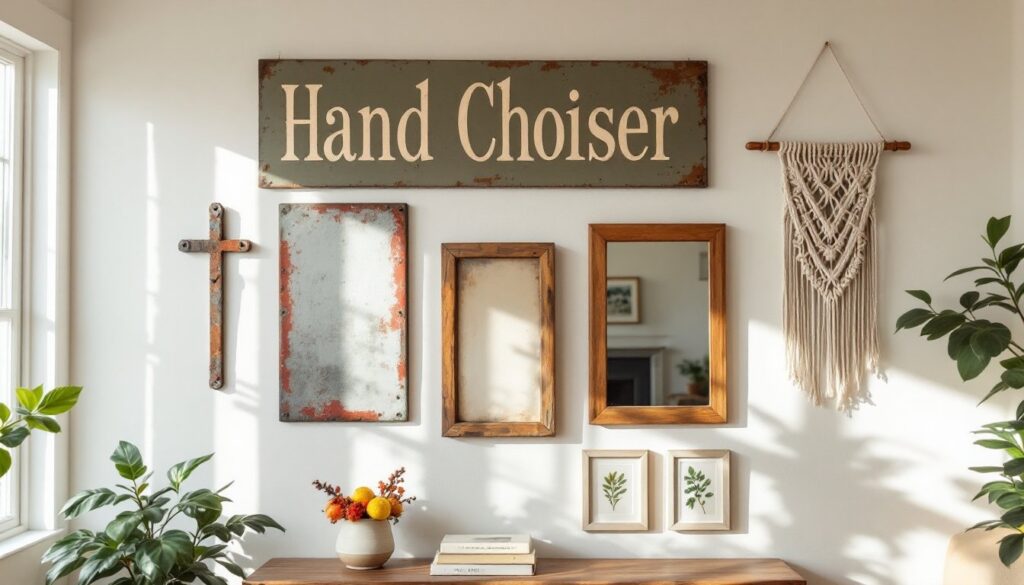
Mixing eras prevents vintage wall decor from feeling like a time capsule gone wrong. Pair 1970s macramé with modern minimalist frames. Layer a 1950s diner sign alongside contemporary photography. The contrast makes each piece sharper.
Scale matters immensely. One large statement piece (a 3′ × 4′ reclaimed wood sign, a vintage window frame, or an oversized mirror) anchors a wall. Fill negative space with smaller complementary pieces rather than gallery-wall chaos. Group odd numbers of items, three small frames, five small prints, which naturally feels more curated than even-numbered arrangements.
Color cohesion ties disparate vintage pieces together. If you’re mixing industrial metal with farmhouse wood, choose a unifying color palette: warm metals + honey wood, or cool metals + whitewashed wood. This prevents the wall from screaming “I grabbed whatever was cheap.”
Leaning pieces (unframed prints, mirrors, or boards propped against the wall rather than hung) add depth and flexibility. You can rotate them seasonally or rearrange without hammer damage. This technique works especially well in living rooms where furniture arrangements shift.
Finally, resist the urge to fill every inch. White space around vintage wall decor lets each piece breathe and actually draws the eye to them. A sparse, intentional arrangement communicates confidence: wall-to-wall coverage reads as cluttered. Vintage wall decor for living rooms shines brightest when it’s a design choice, not a covering strategy.