Table of Contents
ToggleCreating a luxury living room doesn’t mean emptying your wallet or hiring a five-figure designer, it means making intentional choices about materials, color, layout, and ambiance. A well-designed luxury living room feels like an escape: a place where comfort meets sophistication, where every piece serves both form and function. This guide walks you through the practical steps to elevate your living room from ordinary to extraordinary, using strategies that architects and interior designers rely on. Whether you’re starting fresh or refreshing what you have, these essentials will help you build a space that feels both inviting and refined.
Key Takeaways
- A luxury living room is built on intentional choices about materials, color, layout, and ambiance—not just a big budget, so define your style first to avoid expensive mistakes.
- Invest in high-quality furniture with solid wood frames and durable fabrics; a well-made sofa lasts decades while budget models often fail within 5-7 years.
- Layer your lighting into three types—ambient (warm at 2700K), task, and accent—with dimmer switches to shift from functional brightness to intimate ambiance.
- Choose a sophisticated color palette with a dominant neutral, secondary tone, and 1-2 accent colors anchored to one wall or major furniture pieces for refined luxury vibes.
- Use a large area rug (8′ x 10′ minimum) to anchor seating, create visual grounding, and define your living room layout while encouraging conversation-friendly furniture placement.
- Curate accents with restraint—select one or two statement pieces like a large mirror or art collection rather than cluttering, and let negative space enhance the luxury feel.
Define Luxury Living Room Style for Your Home
Before buying anything, nail down your vision. Luxury living rooms come in distinct flavors, modern minimalist, classic traditional, contemporary glam, or transitional (which blends old and new). Your style should reflect how you actually live, not a magazine spread you’ll never measure up to.
Start by gathering inspiration from sources like Architectural Digest to understand what appeals to you. Are you drawn to clean lines and neutral palettes, or do rich jewel tones and ornate details call to you? Notice what specific elements repeat: the quality of fabrics, the warmth of wood tones, how light moves through the room. This clarity prevents expensive mistakes and ensures your space feels cohesive.
Consider your room’s natural strengths. A luxury living room with high ceilings and large windows has different design opportunities than a compact space. Work with your architecture, not against it. Acknowledge your lifestyle too: if you have kids and pets, leather and performance fabrics matter more than delicate silk. Luxury doesn’t mean impractical, it means intentional.
Choose a Sophisticated Color Palette
A luxury living room always begins with a smart color foundation. Rather than random accent colors, build a palette with a dominant neutral (creams, warm grays, soft taupes), a secondary tone, and 1–2 accent colors that tie the room together.
Neutral doesn’t mean beige and boring. Warm whites with undertones of gray or even subtle green feel far more refined than harsh bright white. Soft gray is endlessly versatile, it reads calm and sophisticated, whether your accents lean warm or cool. Paint coverage typically runs 350–400 square feet per gallon, so measure your walls before buying.
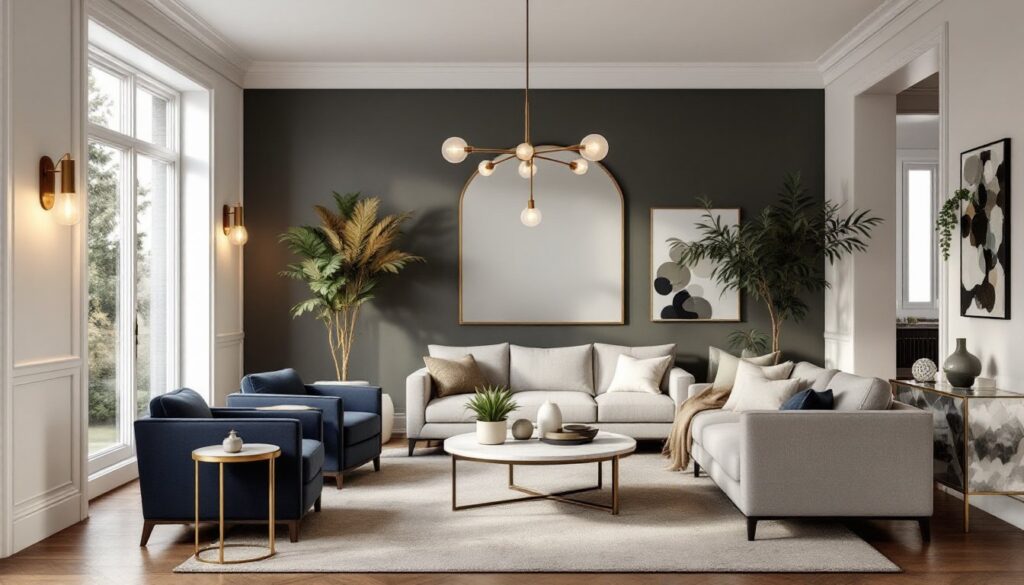
Accent colors should anchor one wall or appear in larger furniture pieces rather than scattered everywhere. Deep navy, charcoal, or forest green alongside warm metallics creates the refined aesthetic that reads as “luxury” instantly. If you prefer lighter schemes, consider Elle Decor for examples of how neutral palettes are elevated through material quality and texture rather than bright pops of color. Test paint samples on your actual walls and observe them at different times of day, paint can shift dramatically in morning light versus evening lamplight.
Invest in High-Quality Furniture and Fabrics
This is where the luxury factor genuinely shows. High-end furniture isn’t always more expensive upfront, but it lasts decades and ages beautifully. Look for solid wood frames (hardwoods like kiln-dried oak or walnut, not particle board), eight-way hand-tied springs in sofas, and high-thread-count fabrics or genuine leather.
A quality sofa, the anchor piece, should have a hardwood frame, innerspring or high-density foam cushioning, and upholstery that feels substantial. Expect $2,500–$5,000+ for a well-made piece: budget models often fail within 5–7 years. Pair your sofa with quality accent chairs or a chaise in complementary fabrics. Performance fabrics like solution-dyed olefin resist staining while maintaining luxury feel: genuine leather develops patina and character over time.
Fabric weight matters: lightweight cottons pill and wear quickly, while heavier linens and wool blends hold up. Living Room Furniture Ideas should emphasize durability alongside style. Proper scale is critical, a sofa that’s 84″ wide suits a spacious room: a 72″ sofa suits smaller spaces. Oversized doesn’t always read as luxurious: proportion does.
Layer Lighting for Ambiance and Function
Lighting separates a good room from a great one. Luxury spaces use three layers: ambient (ceiling fixtures or recessed lights), task (reading lamps, desk lamps), and accent (wall sconces, uplighting, decorative fixtures).
Ambient light should feel warm (2700K color temperature mimics candlelight and feels inviting: 4000K+ reads harsh and clinical). Dimmer switches are essential, they let you shift from bright enough to read to intimate and warm. Task lighting positions matter: floor lamps beside seating areas, table lamps on console tables, wall sconces flanking a fireplace or mirror.
Accent lighting highlights architectural features or artwork. A statement chandelier or sculptural pendant can anchor the room visually. LED bulbs now offer warm, dimmable options at reasonable prices. Avoid overhead-only lighting, which flattens a room and forces you into harsh brightness at night. Gray Sofas in Living Rooms benefit especially from thoughtful lighting, a cool gray sofa glows under warm sconces but appears cold under bright overheads.
Add Luxury Accents and Statement Pieces
Accents transform a functional room into a curated space. Quality accessories come down to curation, not clutter. Select one or two statement pieces, a large mirror, an art collection, a sculptural side table, or decorative objects in materials like brass, marble, or ceramic.
Accessories should reflect your palette and style. If your room is neutral and serene, avoid random pops of color: instead, build layers of texture through linen throw pillows, a quality area rug, and natural wood accents. Mirrors amplify light and space: a large mirror opposite a window or light source makes rooms feel more expansive. Art should be properly scaled, too-small artwork over a sofa looks timid, while oversized pieces command attention.
Interior Design for Living Rooms emphasizes the power of negative space. One perfectly styled bookshelf beats a crammed mantel every time. Metallics like brass or brushed gold add warmth: chrome or polished steel feels cooler and more contemporary. Sources like Home Bunch showcase how restraint and intentionality create luxury, not excess.
Create a Balanced, Polished Layout
Layout determines how a room functions and feels. Arrange seating to encourage conversation, don’t point all chairs at the TV. A sofa facing a pair of chairs with a coffee table between creates intimacy. Floating furniture away from walls (when square footage allows) makes rooms feel intentional and opens up the space visually.
Traffic flow matters: ensure a clear path from the entry to other areas. Heavy, substantial furniture feels grounded: spindly legs and lightweight pieces look flimsy and reduce luxury impact. Anchor seating with a large Big Rugs for Living Rooms, at least 8′ x 10′, that sits under the front legs of sofas and chairs. This visually grounds the room and defines the seating zone.
Symmetry creates formality and polish: asymmetry feels relaxed and modern. Pair identical lamps or nightstands on a console for balance, or use varying heights and styles for eclectic sophistication. Balance doesn’t mean matching, it means proportion and intentionality. Living Rooms with Wood Floors especially benefit from a quality rug that softens hard surfaces and adds warmth underfoot.
Conclusion
Building a luxury living room comes down to discipline and intention. Choose a cohesive style, commit to a refined color palette, invest in quality furniture and fabrics, and layer your lighting thoughtfully. Accents and layout polish the space and make it truly yours. A luxury retreat doesn’t happen overnight, it evolves as you make thoughtful choices. Start with one strong piece and build from there, always prioritizing quality over quantity and timeless design over fleeting trends.