Table of Contents
ToggleA bedroom cluttered with furniture, decorations, and unnecessary items drains your energy before your head hits the pillow. Minimalist bedroom ideas flip this script by stripping away excess and focusing on what truly matters: rest, comfort, and peace. Whether you’re working with a small room or a sprawling master suite, minimalist modern bedroom ideas create a sanctuary where your mind can finally exhale. This approach isn’t about deprivation, it’s about intentionality. A clutter-free bedroom supported by smart design choices transforms how you sleep and start your day.
Key Takeaways
- Minimalist bedroom ideas eliminate visual clutter and competing distractions, allowing your brain to enter the relaxed state necessary for quality sleep and reduced anxiety.
- A neutral color palette of soft whites, light grays, and muted beiges creates a calm foundation that visually expands small spaces and supports minimalist modern bedroom design.
- Essential furniture—a bed, nightstands, and dresser—should be multifunctional and feature clean lines; every piece must serve storage, sleep, or dressing purposes to justify its presence.
- Hidden storage through closet organization, under-bed drawers, and wall-mounted shelves keeps clutter out of sight and prevents items from demanding visual attention.
- Layered lighting with a simple flush-mount ceiling fixture, wall-mounted task lights, and blackout curtains provides flexibility while maintaining the calm aesthetic central to minimalist small bedroom decor.
- Start implementing one change at a time—such as repainting walls or reorganizing your closet—to gradually transform your bedroom into a restful sanctuary that supports better sleep.
Why Minimalism Transforms Your Bedroom Into a Sanctuary
Minimalism works in bedrooms because your sleeping space serves one primary function: rest. Every item you add competes for your attention, even subconsciously. When you walk into a room loaded with visual clutter, piles of clothes, overflowing nightstands, too many decorative objects, your brain stays in low-level alert mode. That’s the opposite of what a bedroom should do.
Minimalist small bedroom decor principles are especially practical for compact spaces. A room with 100 square feet can’t absorb a full dresser, a nightstand, a shelf unit, and a decorative bench without feeling suffocating. By keeping only essential furniture and limiting your color palette, even tight bedrooms breathe. Minimalist bedroom ideas also reduce cleaning time and dust accumulation, fewer surfaces mean fewer places for dust to settle and easier maintenance overall.
The psychological benefit runs deeper. Research consistently shows that environments with less visual noise improve sleep quality and reduce anxiety. This is why hotel rooms with neutral décor and minimal furnishings feel so restful. You’re not paying for stripped-down aesthetics: you’re investing in your sleep architecture.
Choose a Neutral Color Palette as Your Foundation
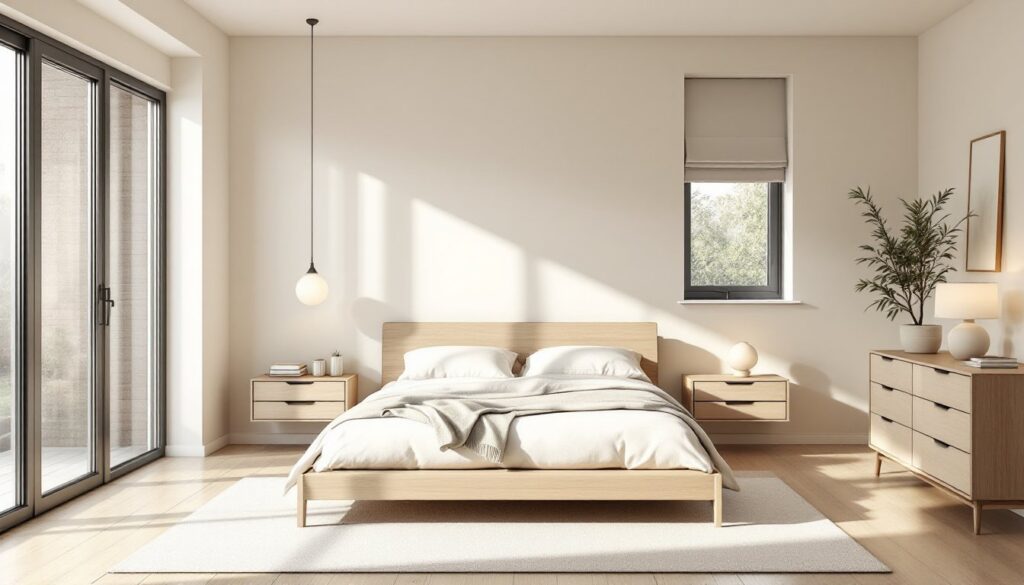
Your wall color sets the mood for everything else in the room. Neutral doesn’t mean boring, it means intentional. Warm whites, soft grays, pale beiges, and muted greiges serve as your backdrop without demanding attention. These colors visually expand small spaces and create a cohesive foundation for minimalist modern bedroom ideas.
Start by painting walls in a soft, warm white or light gray, Benjamin Moore’s “Chantilly Lace” and “Repose Gray” are industry standards that photograph well in natural light. Paint coverage runs about 350 square feet per gallon for standard latex interior paint, so a 12′ × 14′ bedroom typically needs just one gallon for walls (buy an extra quart to account for touch-ups). Apply primer first on bare drywall to ensure even color coverage and better adhesion: this step isn’t optional on new surfaces.
Keep accent colors minimal. If you add a second color, choose one that’s no more than two or three shades darker than your base. Consider a matte finish on walls to reduce reflectivity and create a calming feel, glossy finishes read as more energetic and aren’t ideal for sleep spaces.
For trim and doors, stick with either the same wall color or a crisp bright white. Soft whites on walls paired with bright white trim creates visual interest without clutter. Avoid trendy deep colors in bedrooms: they date quickly and can make spaces feel smaller.
Declutter and Define Your Essential Furniture
This is where minimalist bedroom ideas meet reality: what furniture actually needs to live in your bedroom? A bed, a nightstand, and somewhere to store clothes. Everything else is negotiable.
Start by taking inventory of what you currently own. If a piece doesn’t serve sleep, storage, or dressing, it goes. That extra reading chair that holds clean laundry? That decorative bookshelf filled with trinkets? Those are clutter in minimalist thinking. Be ruthless. A minimalist bedroom typically houses a bed frame, one or two nightstands, a dresser, and possibly a clothes rod or built-in closet. That’s the core.
Select Multifunctional Pieces That Earn Their Space
When you do choose furniture, every piece should pull double duty. A bed with built-in drawers underneath stores off-season bedding or extra linens. A low dresser can do duty as a TV console or meditation space, multifunctional pieces reduce the total furniture footprint. Nightstands with closed storage (drawers, not open shelves) keep nighttime essentials, water bottle, book, phone charger, hidden from view.
For minimalist bedroom ideas for small rooms, consider a platform bed (typically 10-14 inches high) instead of a traditional frame with legs. Platform beds take up less visual space and create the illusion of more floor room. A queen platform bed is roughly 60″ wide × 80″ long: measure your room’s remaining floor space before committing.
Choose furniture with clean lines and simple profiles. Ornate carved legs, tufted details, and complex joinery add visual weight and distract from the calm aesthetic you’re building. Light wood tones or matte-finish metal frames align better with minimalist modern bedroom ideas than dark stains or glossy veneers.
Master Storage Solutions That Stay Hidden
A clutter-free bedroom is only possible if you have adequate hidden storage. Visible storage, open shelves, baskets piled on the floor, storage benches at the foot of the bed, undermines minimalism. You still have clutter: you’ve just called it décor.
Closet organization is your first line of defense. If your bedroom closet is standard size (roughly 4 feet wide × 2.5 feet deep), install a second rod at 42-48 inches from the floor to double your hanging capacity. Use matching hangers (wood or metal, not plastic) to create visual uniformity. Fold heavier items like sweaters into labeled bins on upper shelves: fold lightweight items like t-shirts in the same bin depth and arrange them vertically so you can see every piece without stacking.
Beyond closets, under-bed storage draws from hotel design principles. Low-profile plastic or wooden boxes (approximately 24″ × 16″ × 6″) slide under platform beds and store seasonal clothing, extra pillows, or linens. Label everything, you can’t enjoy minimalism if you forget what’s stored and buy duplicates.
For minimalist small bedroom decor, avoid freestanding shelving units. Wall-mounted shelves consume less visual space and keep floor area open. Limit yourself to one or two shallow shelves (8-10 inches deep) to avoid turning them into catch-alls. A single shelf above a dresser holds only a lamp and, optionally, one small plant or object. That’s it. The psychological resistance you feel to that simplicity? That’s how you know it’s working.
Drawers in nightstands and dressers should be fully lined, no exposed wood interiors with loose coins or hair clips. Matching drawer dividers and small containers create order and prevent items from shifting. When a drawer opens, everything inside should look intentional, not provisional.
Layer Lighting for Ambiance Without Clutter
Lighting in minimalist bedrooms works differently than in other rooms. You need layers, ambient, task, and accent, but they should be as invisible as possible when not in use.
Start with ambient lighting: a flush-mount ceiling fixture that provides soft, even light. Avoid chandeliers or multi-bulb fixtures that create busy visual patterns. A simple 8-10 inch diameter drum or disk light (with a frosted lens, not clear glass) diffuses light evenly without drawing attention. Install bulbs in the 2700K color temperature range (warm white): this mimics sunset and supports melatonin production, which promotes sleep.
Task lighting goes beside the bed. Wall-mounted swing-arm lamps consume zero nightstand real estate and can be swung away when not needed. Alternatively, a single pendant light mounted 18-24 inches above and to the side of the bed works well. Avoid table lamps with large fabric shades: they collect dust and add visual weight. If you use table lamps, choose ones with simple metal or ceramic bases and minimal ornamentation.
Dim your main ceiling light with a smart dimmer switch or standard three-way bulbs. This gives you flexibility without adding more fixtures. Blackout curtains or cellular shades in a neutral tone block external light at night and prevent dust accumulation on window sills, avoid heavy drapes or layered curtains, which clash with minimalism.
Accent lighting is optional but effective. A single wall sconce above the bed adds interest without clutter if the fixture is flush to the wall and has a minimalist profile. Think simple geometric shapes, not ornate details. The modern bedroom design ideas featured in contemporary design publications often use this layered approach to create flexibility and visual calm.
Hide all charging cords and cables. Run phone chargers behind the nightstand or inside a drawer: use velcro cable ties to bundle them. Visible tech cords destroy minimalism faster than almost anything else.
Conclusion
Minimalist bedroom ideas aren’t a trend, they’re a practical response to how your brain actually rests. Whether you’re building a minimalist small bedroom decor plan for a studio or reimagining a master suite, the principles remain the same: neutral walls, essential furniture, hidden storage, and layered lighting. The result is a bedroom that supports sleep and calm instead of competing for your attention. Start with one change, paint the walls, declutter one closet, or swap out busy lighting, and build from there. Your future rested self will thank you.