Table of Contents
ToggleA low sloped ceiling can feel confining if you’re not strategic about design. But here’s the thing: these tight overhead constraints can actually become your bedroom’s biggest charm point when you approach them thoughtfully. Whether you’re working with a bedroom in an attic space, a bungalow, a second floor with angled rooflines, or even slanted ceiling living room ideas that apply equally to bedrooms, the goal is the same, create a restful sanctuary that doesn’t feel cramped. The right combination of storage solutions, color choices, and furniture placement can transform what feels like a limitation into a cozy, intimate retreat. Let’s walk through eight practical strategies that homeowners and DIY enthusiasts use to maximize every inch of a low sloped ceiling bedroom.
Key Takeaways
- Maximize vertical wall space with built-in shelving, floating shelves, and under-bed storage to reclaim usable square footage in low sloped ceiling bedrooms without sacrificing floor space.
- Paint walls and ceiling the same light, neutral tone to blur visual boundaries and create the illusion of height, with soft whites, warm beiges, and pale grays being the most effective colors for reducing claustrophobia.
- Use flush-mount or semi-flush ceiling lights and recessed downlights instead of hanging fixtures to avoid visual heaviness and maximize the limited overhead space.
- Choose low-profile furniture between 30–40 inches tall and position your bed perpendicular to the slope so your head aligns with the highest ceiling point for both comfort and psychological ease.
- Layer your lighting with ambient, task, and accent lighting—including wall-mounted sconces and under-shelf strips—to shift focus away from ceiling height and create designer-quality visual interest.
- Avoid dark, saturated accent colors; instead, use soft tones like sage green or dusty blue on a single feature wall or at the lowest slope point to add depth without compressing the space.
Maximize Vertical Wall Space with Strategic Storage
The real estate you gain with built-in storage is invaluable in a low ceiling bedroom. Before you buy standalone dressers or nightstands, look at the walls themselves, especially where the ceiling slopes down lowest. This is where custom shelving, floating shelves, or even a built-in window seat with storage underneath becomes gold.
Consider installing floor-to-sloped-ceiling shelving units along the angled wall. This captures the full height without wasting dead space at the top. Wall-mounted shelves work beautifully because they don’t eat into floor space, which helps the room feel larger. If you’re handy with a stud finder and level, floating shelves are a weekend project: locate studs, use appropriate anchors (toggle bolts or lag screws, depending on weight), and install shelf brackets at even heights.
Under-bed storage drawers are another no-brainer for low ceilings. You’re already working with limited overhead room, so push tall furniture out the door and embrace low-profile pieces. A bed with built-in storage underneath, or simple rolling drawers you slide under the frame, keeps linens, off-season clothes, and extra bedding out of sight but easily accessible.
Don’t overlook closet optimization either. If your closet has a low ceiling or weird angles, install a double-hanging rod where the headroom allows, or add shelf dividers and hanging organizers to maximize what vertical space exists. A closet door organizer adds pockets for small items without any installation cost.
Choose the Right Color Palette to Open Up the Room
Color is your psychological and optical tool for fighting a boxy feeling. The right palette does two things: it makes the space feel less claustrophobic and sets the mood for restful sleep.
Light, Neutral Tones for Airy Bedrooms
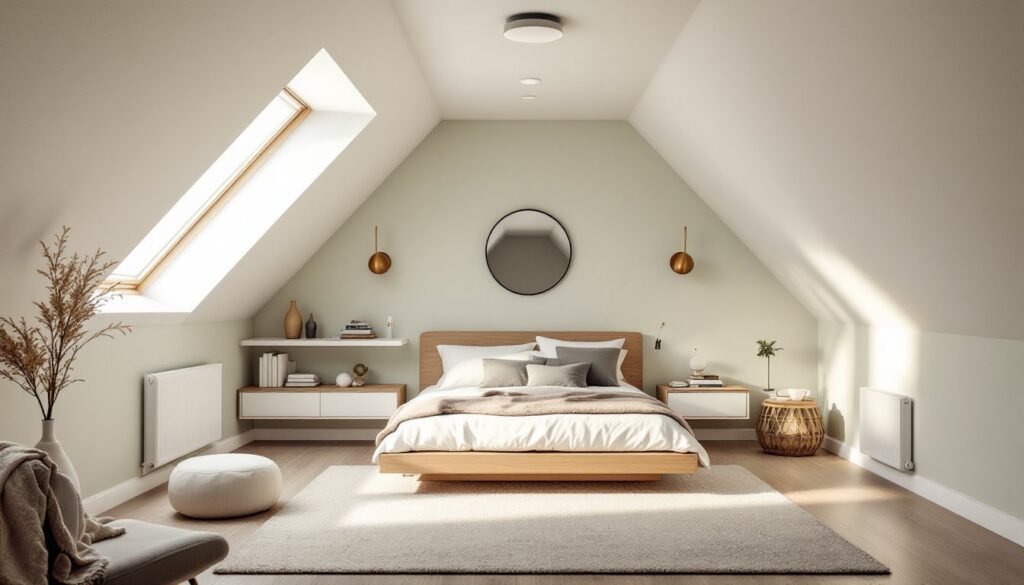
Light neutrals, soft whites, warm beiges, pale grays, and creamy off-whites, are the go-to foundation for low ceiling rooms. These colors reflect light rather than absorb it, which bounces illumination around the space and tricks the eye into perceiving more height. Paint your walls and ceiling the same light tone to blur the visual boundary between horizontal and vertical surfaces. This technique is used by interior designers specifically to reduce the visual impact of a low overhead.
When selecting paint, grab a couple of sample pints from your local hardware store and paint 2-by-3 foot sections on your walls. Let them dry fully, paint colors look dramatically different in morning light versus evening light. Flat or matte finishes help hide imperfections on angled surfaces, while semi-gloss on trim adds subtle definition without visual weight.
Accent Colors That Add Depth Without Closing In
You don’t need to live in a blank box. Subtle accent colors work beautifully on a single wall or as trim detail. The key is keeping them soft and avoiding dark, saturated hues that visually compress the space. Think sage green, dusty blue, or warm taupe rather than forest green or navy.
Use your accent color strategically: paint the wall at the lowest point of the slope, not the ceiling itself. Or keep it to a feature wall at eye level. Trim work, baseboards, window frames, or crown molding, can carry a slightly bolder tone while staying recessive. A living room with vaulted ceiling demonstrates how vertical lines and thoughtful color layering can actually enhance spatial perception, a principle that translates directly to bedroom design.
Lighting Strategies That Define the Space
Lighting in a low ceiling bedroom needs to be layered and intentional. You’re working with less overhead height, so fixtures must be flush-mount or semi-flush rather than hanging chandeliers that’ll hit your head or feel visually heavy.
Install a flush-mount or semi-flush ceiling light as your main fixture, these sit within 4–8 inches of the ceiling, not hanging down. For ambient lighting, recessed downlights (also called can lights) work beautifully in low ceiling spaces because they’re completely recessed into the ceiling and create no visual bulk. If you’re adding recessed lights yourself, plan their placement on a ceiling diagram before cutting holes. Use 4-inch trim rings for standard 8-foot ceilings: they look proportionate without overwhelming the overhead plane.
Task lighting is equally important. Wall-mounted sconces on either side of the bed eliminate the need for tall bedside lamps and add a designer touch. These don’t require new wiring if you wire them through existing switch loops, a moderately handy person can run cable through walls during renovation, or hire a licensed electrician for safety and code compliance. (Electrical work codes vary by jurisdiction: check your local requirements.)
Don’t forget accent lighting. A small under-shelf strip light or directional spotlighting on artwork draws the eye horizontally and upward, creating visual interest that shifts focus away from ceiling height. Warm color temperature bulbs (2700K) promote relaxation, while cooler temps (4000K) support task lighting. Use soft, dimmable bulbs so you control the mood.
Furniture Placement and Scale for Low Ceilings
Scale matters enormously in a room where headroom is tight. A tall armoire or bookcase can work against you visually and practically, you’re always aware of the ceiling pressing down. Instead, choose lower-profile furniture that sits between 30–40 inches tall (standard nightstands and low dressers). This keeps your sightline and mental space above the clutter.
Place your bed strategically. Position it against a wall that runs perpendicular to the slope, not parallel, this positions your head and body where the ceiling is highest, psychologically and practically. If possible, use a platform bed or low-profile frame (8–12 inches high) rather than a tall headboard with storage towers above it. You want the focal point to draw the eye horizontally, not vertically.
Keep the room from feeling stuffed by limiting large furniture to one or two statement pieces. A single nightstand, a dresser, and a chair are plenty. Use modern home decor ideas as a reference for how to layer texture and interest without visual clutter, simplicity reads as space. Mirrors are a classic trick: place one opposite a window to reflect light and expand the perceived room depth. Just avoid mirrors that face the sloped ceiling directly: position them to show wall, window, or furniture instead.
Consider wall-mounted or corner desks if you need workspace: these float above the floor and don’t anchor visual weight to corners. Floating shelves and wall-hung elements create airiness that floor-based pieces can’t match.
Conclusion
Low sloped ceilings don’t have to mean low quality of life. By embracing vertical storage, maintaining a light color palette, layering your lighting, and choosing appropriately scaled furniture, you’re not just working around constraints, you’re building a bedroom that feels intentional and intimate. These strategies work whether your ceiling slopes at 45 degrees or dips to a modest 7 feet. The goal is always the same: create a restful space where you forget about the architecture and simply enjoy the room. Start with one or two changes, live with them, then adjust. Most of the best bedroom transformations happen gradually as you discover what works for your space and habits.