Table of Contents
ToggleYour living room tells a story about who you are, but if that story feels cluttered, mismatched, or stuck in a design time warp, it’s time to edit. Tacky living room decor doesn’t happen overnight: it’s usually the result of gradual choices, impulse buys, and spaces that were never planned with a cohesive vision. The good news? Fixing it doesn’t require a full renovation or a six-figure budget. With intentional changes to color, furniture arrangement, and accessory selection, you can transform a tired space into one that feels intentional, refined, and genuinely inviting. Let’s dig into what makes a room look dated and crowded, then walk through practical fixes you can start this weekend.
Key Takeaways
- Tacky living room decor results from mismatched styles, excessive ornamentation, and low-quality materials; fixing it requires intentional color choices, thoughtful furniture arrangement, and strategic restraint rather than a full renovation.
- Stick to a three-color palette with a neutral base, secondary soft tone, and one accent color to create visual harmony and prevent your living room from feeling chaotic and fractured.
- Invest in one or two quality anchor pieces like a well-made sofa or credenza, ensure proper furniture scale and arrangement with breathing room, and measure your space before purchasing to avoid cramped or awkwardly proportioned rooms.
- Follow the 80/20 rule by keeping 80% of your space clear and reserving only 20% for styled accessories, pillows, and décor to maintain a curated, intentional feel rather than cluttered chaos.
- Quick, high-impact fixes include painting walls in warm neutrals, investing in a quality area rug, decluttering ruthlessly, swapping out throw pillows, and upgrading lighting—each change can be completed with minimal budget in a weekend.
- Tacky living room decor transforms through clarity and intentional selections; start with one or two changes like painting and decluttering, then layer in additional improvements as your budget allows.
What Makes Living Room Decor Look Tacky
Tacky isn’t a strict definition, it’s a feeling. A room looks cheap or overdone when multiple design choices fight for attention instead of working together. Think mismatched styles (farmhouse meets glam meets boho), excessive ornamentation, low-quality materials made obvious, or colors that feel random rather than intentional.
The root cause often boils down to a few patterns. First, there’s no clear style anchor, no design direction to guide purchasing decisions. Second, there’s too much, too many colors, too many textures, too many accessories competing for visual real estate. Third, quality suffers: cheap furniture with visible particleboard, flimsy frames, or plastic details reads instantly as “budget” rather than “budget-smart.” The final culprit? Spaces designed in isolation, where each piece was bought for a room that didn’t yet have its own identity.
When you step into a room that feels refined, you rarely notice everything at once. Your eye settles, the palette feels cohesive, and the room “breathes.” That’s not accident, it’s restraint and intention.
Color Choices That Cheapen Your Space
Color is the fastest way to elevate or downgrade a room. A sophisticated palette doesn’t mean boring: it means thoughtful.
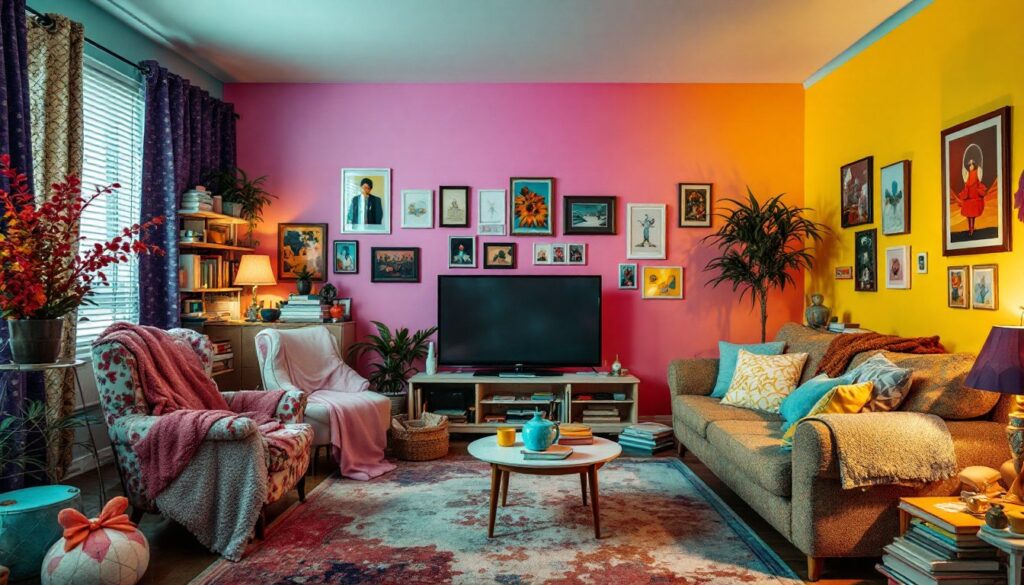
One of the biggest offenders is walls painted in colors that feel artificial or oversaturated, ultra-bright accent walls, neon pastels, or that viral TikTok shade everyone and their cousin painted last year. By 2026, these date immediately. Instead, consider warmer whites, soft grays, warm taupes, or muted earth tones as your base. These colors age well and provide a calm backdrop for other design elements to shine.
Artificial-looking finishes are equally problematic. High-gloss or cheap latex paints in bold colors scream budget. If you’re painting, invest in quality paint with good hide and finish, flat or matte bases feel more sophisticated than glossy walls, and they hide imperfections better. Primer on first use matters too: it prevents undertones from showing through.
Too Many Competing Hues
The easiest way to make a room feel chaotic is to treat every surface as an opportunity for a new color. A good rule: stick to a three-color palette, a neutral base (walls), a secondary neutral or soft tone (larger furniture), and one accent color for pops through smaller pieces, art, and textiles.
When your sofa, curtains, rug, accent wall, and throw pillows are each a different color, your eye has nowhere to rest. The room feels fractured. Instead, pick your anchor piece (usually the largest furniture item), then pull two or three colors from that piece to distribute elsewhere. This creates visual harmony that automatically feels more refined.
Furniture and Layout Problems to Avoid
Furniture arrangement and quality are where many living rooms go wrong. First, the layout issue: too many pieces crammed into a space, oriented randomly, or arranged to face a TV rather than create conversation zones. Living rooms that feel cramped or awkwardly spaced read as unplanned.
Start by measuring your room and mapping out furniture to scale on paper. Leave negative space, rooms need breathing room to feel intentional. The sofa doesn’t always belong against the wall: sometimes floating it creates a cozier, more curated arrangement. Ensure seating faces a focal point (fireplace, window, or gallery wall, not necessarily the TV buried in a media console).
Second, furniture quality matters visually. Living room furniture ideas should balance durability with aesthetic. Cheap upholstery sags, particleboard shows through, and frames wobble, all instantly visible. You don’t need designer pieces, but investing in one or two quality anchor items (a well-made sofa or credenza) changes how the whole room reads. Match wood tones, if possible, or intentionally mix them (mixing warm walnut with cool-toned metal works: random mixing does not). Mismatched, unfinished, or obviously low-quality wood screams temporary.
Furniture scale also matters. An oversized sofa in a small room or tiny accent chairs in a large space throws proportions off. Oversized elements feel tacky when they’re clearly wrong for the space. Measure your room’s dimensions and choose pieces that fit the scale you’re working with.
Clutter and Accessory Overload
This is the fastest way to ruin an otherwise decent living room. Excess accessories, throw pillows, throw blankets draped everywhere, knick-knacks, candles, books stacked without purpose, make a space feel chaotic and cluttered rather than curated.
A refined living room follows the 80/20 rule: 80% of the space should be relatively clear, with 20% intentionally styled for personality. Too many pillows bunch awkwardly on sofas: a good rule is three to five pillows maximum, arranged with intention (not a random stack). Throws should be folded neatly over a chair arm or basket, not heaped. Shelving should feature breathing room between objects: if every inch is filled, it reads as hoarding, not decorating.
Accessories should tell a story. One well-chosen art piece beats a wall of cheap prints. One beautiful vase beats a shelf of dollar-store items. Three good books and a ceramic box beat twelve random objects. Consider adopting a “one in, one out” rule: before buying a new accessory, remove an old one. This keeps spaces intentional.
Textiles are accessories too. If you have patterned curtains, a patterned rug, patterned pillows, and patterned throw blankets, the room feels overstimulated. Pair bold patterns with solid colors: layer solids with one or two complementary patterns. How to style a living room successfully means knowing when to stop. Restraint is what separates styled rooms from decorated-to-death ones.
Quick Fixes That Make an Immediate Impact
If a full redesign feels overwhelming, these tactical moves shift how a room reads without massive time or money:
Paint the walls. A fresh coat of quality paint in a neutral, slightly warm tone (soft gray, warm white, or muted taupe) instantly raises the design bar. Skip bold accent walls: they date faster than trends change. Even one weekend and under $200 (including primer and supplies) transforms everything.
Invest in a quality area rug. Rugs anchor spaces and define zones. Big rugs for living rooms should cover most of your seating area, this creates visual cohesion. Choose neutral, high-quality materials (natural wool, high-quality jute, or wool blends) over synthetic options, which look cheap and wear visibly.
Declutter ruthlessly. Remove half your accessories. Keep pieces that actually matter, art you love, books you’ll read, objects that serve a function or spark joy. Empty surfaces and intentional empty space feel intentional, not like you ran out of decorations.
Swap out throw pillows. Retire the novelty pillows, mismatched sets, or ultra-trendy covers. Choose two or three in coordinating solids and textures (one velvet, one linen, one subtle pattern if you want it). This alone makes sofas look polished.
Hang better art. Replace poster-board prints or mismatched frames with proper framing (even a simple black or white frame from a frame shop elevates prints). Consider a gallery wall with a cohesive frame style and color rather than random, chaotic layouts. Resources like Apartment Therapy and MyDomaine showcase curated gallery ideas worth studying.
Add good lighting. Cheap table lamps with fabric shades are often the problem: upgrade to lamps with proper construction and shades that feel tailored. A mix of ambient, task, and accent lighting beats a single overhead fixture.
Rearrange furniture. Move your sofa away from the wall, angle seating toward a focal point, or relocate the TV. Sometimes a free rearrangement is the cheapest redesign. Measure first, sketch it out, and commit to a layout that feels intentional rather than default.
Conclusion
Tacky living rooms aren’t born: they’re built through small, unmindful choices stacked over time. The fix isn’t complicated, it’s about clarity, restraint, and intentional selections. Start with one or two changes this month (paint and declutter are high-ROI), then layer in others as budget allows. Interior design for living rooms is simpler when you remember that less, chosen well, always beats more. Your living room can feel refined without renovation: it just needs a plan.