
Table of Contents
ToggleA garage conversion is one of the smartest investments a homeowner can make without moving. Whether you need extra living space, a home office, or a rental unit, converting your garage taps into square footage that’s already paid for. Unlike an addition, a garage conversion avoids the foundation work and roof complications of building from scratch. In 2026, more homeowners are choosing garage conversions over traditional expansions, especially as remote work and flexible living arrangements reshape how we use our homes. Let’s walk through what’s involved, what works, and how to actually pull it off.
Key Takeaways
- A garage conversion transforms existing structure into livable space for a home office, bedroom, or rental unit at a fraction of new construction costs—typically $12,000–$35,000 depending on finishes and structural requirements.
- Building permits are essential; most jurisdictions require multiple permits for garage conversions, and skipping this step can void insurance and tank resale appraisal.
- Proper insulation (R-13 to R-19), climate control with HVAC or mini-split systems, and egress windows are non-negotiable code requirements that transform a cold storage space into comfortable living quarters.
- Electrical and plumbing upgrades—including potential panel service increases and licensed professional installation—add significant cost and complexity to your garage conversion project.
- Remote work popularity is driving garage-to-office conversions in 2026, making this one of the smartest home investments for adding separate workspace without the expense of a full addition.
What Is a Garage Conversion and Why Consider It?
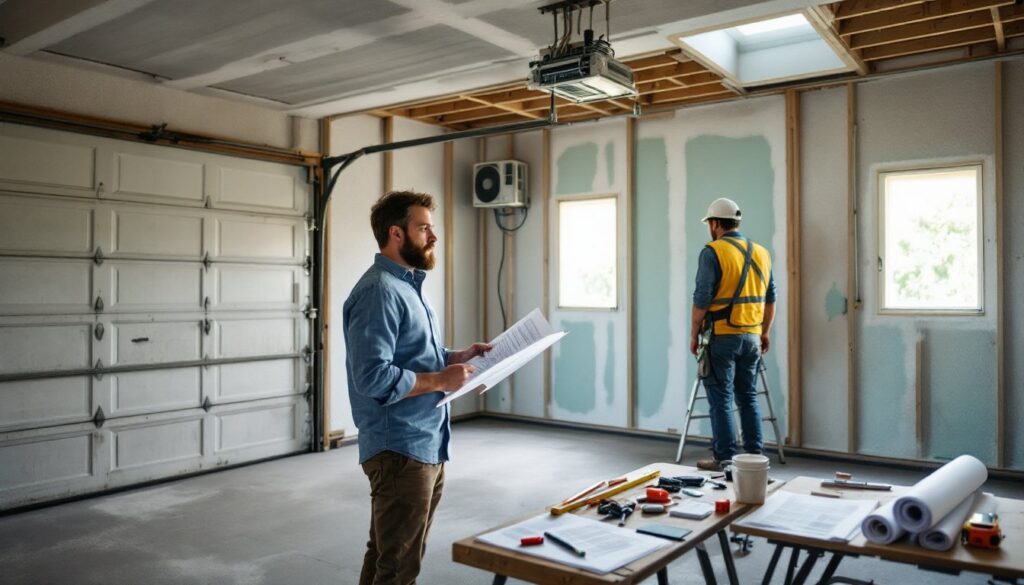
A garage conversion transforms a detached or attached garage into finished, livable space, anything from a bedroom and kitchen to a home office or studio. Unlike storage updates, this involves insulation, electrical work, flooring, climate control, and sometimes structural changes. It’s not a weekend project, but it’s far simpler than a full-house renovation.
Why consider it? A garage-to-living room conversion or garage-to-room project solves real problems. You gain usable square footage at a fraction of new construction costs. If you’re planning a garage to living room conversion, you’re adding value that reflects in resale price and immediate livability. Some homeowners use garage conversions to create accessory dwelling units (ADUs) for aging parents or rental income. Others simply need the extra bedroom without the expense of an addition. The biggest draw: you already own the space.
Popular Garage Conversion Ideas for Modern Homes
Home Office and Studio Space
A garage-to-room conversion into a dedicated office is hugely popular with remote workers. You get a separate, quiet space away from household distractions, and you control the climate and lighting. Install insulation (R-13 to R-19 batts in the walls, depending on your climate zone), drywall over it, and you’ve immediately changed the feel. Add dedicated circuits for your desk, monitor setup, and charging station. Consider a soffit or ceiling height: if your garage has an 8-foot ceiling, it’ll feel tight. A window or two transforms both the space and your mood during long workdays.
A studio, art, music, or craft, works similarly but often skips some finish work (exposed beam look, polished concrete floors). The key is climate control and electrical capacity. A painter or musician needs stable humidity and temperature: a garage without proper insulation swings wildly with weather.
Guest Bedroom or ADU
A garage-to-room bedroom is straightforward: insulate, drywall, flooring, paint, and add a closet. If you’re building a guest suite, include a half-bath or full-bath. For an accessory dwelling unit (ADU), you’ll need a kitchenette, full bath, and separate entrance, this triggers more aggressive permitting and building code compliance, but many jurisdictions now fast-track ADUs to address housing shortages.
Bedrooms need egress windows (code-required emergency exits). A single window in a garage conversion bedroom isn’t optional, it’s a building code requirement in most jurisdictions. Size matters too: the window must meet minimum area (usually 5.7 square feet net) and sill height (max 44 inches from floor) so someone can actually escape a fire.
Key Planning and Permit Considerations
Before you swing a hammer, talk to your local building department. A garage conversion isn’t a “permit-optional” project in most jurisdictions. Depending on your area, you may need a building permit, electrical permit, and mechanical permit. Some municipalities classify garage-to-room conversions as additions and require compliance with setback rules, lot coverage limits, and off-street parking minimums.
Parking requirements vary wildly. Some cities require you to replace the lost garage parking space with a driveway spot or on-street permit. Others waive this for ADUs. Your county or city’s zoning office has the specific rules: assume nothing.
Structural work is another gating factor. If you’re removing the garage door and framing a wall with a window or door, that’s typically fine. If you’re removing a load-bearing beam, say, the header above the garage door opening, you’re into serious structural territory. A licensed engineer or architect may be required to stamp your plan. Cost varies, but expect $300–$1,500 for a structural engineer’s review.
Utility connections matter too. If the garage is detached and you want a bathroom or kitchenette, you’ll need plumbing runs from the main house or septic. Electrical may need a subpanel. These upgrades add cost and complexity quickly. Insurance and resale also hinge on permits: unpermitted work can void coverage and tank your home’s appraisal.
Essential Steps to Execute Your Garage Conversion
Step 1: Assess the Space and Get Permits
Measure the garage (length, width, height). Check for existing utilities: electrical panel, HVAC ductwork, plumbing, gas lines. Confirm the ceiling height and insulation status. Once you’ve sketched a rough plan, submit drawings to your building department for permit review. Expect 4–8 weeks: don’t skip this.
Step 2: Install Insulation and Climate Control
Remove the garage door and frame a wall opening if needed. Spray foam or fiberglass batts go between studs (R-13 to R-19 depending on climate). Don’t skimp, a poorly insulated garage stays cold and wastes energy. Install a mini-split HVAC system, heat pump, or ductwork from your existing HVAC if feasible. Ventilation (bathroom fan or fresh-air intake) prevents moisture buildup.
Step 3: Electrical and Plumbing
Run new circuits from your panel or subpanel. A garage conversion typically needs 200 amps total service (check with your electrician: older homes may need an upgrade). Install outlets, switches, and lighting on new circuits. If you’re adding a bathroom, hire a licensed plumber for rough-in work (supply lines, drain-waste-vent stacks). DIY plumbing mistakes are costly and code violations.
Step 4: Drywall, Flooring, and Finishes
Drywall over insulation. Use 1/2-inch drywall (or 5/8-inch fire-rated if required by code). Tape, mud, sand, and prime. For flooring, vinyl plank, tile, or carpet all work: concrete staining is budget-friendly if the slab is in decent shape. Paint, trim, and doors finish the look. Budget 4–6 weeks for drywall and finishes if you’re DIYing or hiring labor.
Step 5: Final Inspections
Call for framing, electrical, plumbing, and final inspections as work completes. The building inspector checks insulation, egress, electrical routing, and code compliance. Don’t cover framing until the inspector signs off. Average cost for a full garage conversion runs $12,000–$35,000 depending on size, finishes, and structural needs: budget estimates vary significantly by region and material choices. Resources like garage conversion cost guides break down typical expenses and regional variations.
For detailed planning, comprehensive garage conversion guides walk through timelines, permitting, and what to expect. Expert guidance on garage conversion dos and don’ts covers structural pitfalls and code compliance, saving headaches early on.
Conclusion
A garage conversion isn’t quick or free, but it’s one of the highest-return projects for homeowners. You’re not starting from bare ground or dealing with foundation issues. You’re taking existing structure and making it livable. Whether you’re turning it into a home office, guest bedroom, or rental unit, the bones are there. Get permits, nail the insulation and climate control, and don’t skip structural or electrical reviews. Done right, a garage conversion adds years of usable space and real equity to your home.