Table of Contents
ToggleModern wall art has become essential for creating a cohesive living room that reflects personality and contemporary design sensibility. Unlike dated décor trends, thoughtful wall art elevates the entire space, whether you’re drawn to bold abstracts, geometric lines, or statement-sized pieces. The right artwork doesn’t just fill empty wall space: it anchors your room’s color palette, complements your furniture layout, and sets the mood for how the space feels. If you’ve been staring at blank walls wondering where to start, this guide walks you through seven proven approaches to selecting and displaying modern wall art that actually works in real homes.
Key Takeaways
- Modern wall art for living rooms transforms blank spaces into cohesive, visually interesting rooms while anchoring your color palette and setting the mood without requiring furniture replacement.
- Abstract and minimalist art works best when properly sized (24 inches minimum for moderate walls) and selected to echo existing colors in pillows, rugs, or furniture.
- Statement pieces (36+ inches wide) positioned above major furniture like sofas or fireplaces create powerful focal points that define the entire room’s aesthetic.
- Gallery wall arrangements should maintain intentional spacing (2–4 inches between frames), consistent frame colors, and unified color themes to feel modern rather than cluttered.
- Hang modern wall art at eye level (57–60 inches from floor center) with 4–6 inches of breathing room above furniture, and aim for artwork width that’s roughly two-thirds the width of the furniture it anchors.
- Professional installation with proper hardware, a level, and careful measurement transforms even excellent artwork into an intentional design element rather than an accidental afterthought.
Why Modern Wall Art Matters For Your Living Room
Your living room walls are prime real estate. They’re the backdrop for daily life, where family gathers, guests sit, and you unwind after long days. Bare walls make a room feel incomplete and cold, no matter how great your furniture is. Modern wall art solves this by adding visual interest, color, and personality without cluttering surfaces.
Wall art also ties a room together. A well-chosen piece (or thoughtful collection) acts like a color anchor, pulling hues from your sofa, accent pillows, or rug into a cohesive story. It’s affordable décor compared to replacing furniture, and you can swap it out as trends or moods shift. Modern art works because it embraces simplicity, clean lines, and intentional spacing, the same principles that make contemporary living rooms feel spacious and calm.
When you’re working with how to style a living room, wall art is one of the quickest wins. It doesn’t require construction, permits, or special tools. It’s accessible, flexible, and powerful.
Abstract And Minimalist Art For Contemporary Spaces
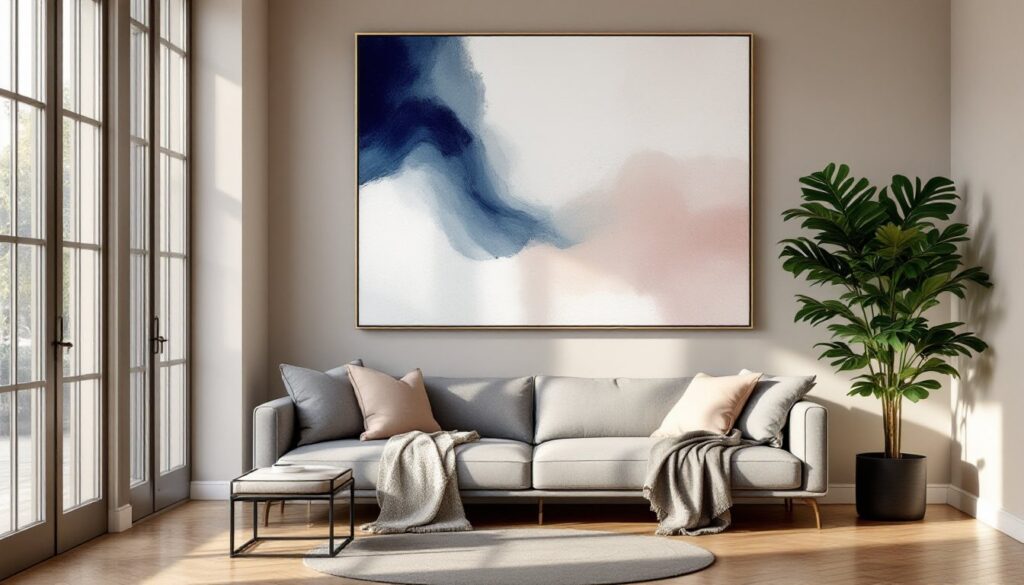
Abstract art speaks the language of modern design. Think soft watercolor washes, bold color blocks, or organic shapes that don’t try to represent anything literal. These pieces work because they’re forgiving, they complement nearly any color scheme and don’t compete with furniture or architectural details.
Minimalist art takes abstraction further by stripping away everything unnecessary. A single black line on white canvas, a subtle gradient, or two-tone geometric forms create visual calm while making a design statement. This approach pairs perfectly with clean-lined furniture and open floor plans. If your living room leans toward scandinavian or contemporary style, minimalist pieces reinforce that aesthetic naturally.
When choosing abstract or minimalist work, scale matters. A small abstract print gets lost on a large wall: a properly sized piece (typically 24 inches wide minimum for moderate walls) commands attention without overwhelming the room. Watercolor abstracts work especially well above sofas or console tables, while bold geometric minimalism suits statement walls. Look for pieces with color connections to existing elements, if your throw pillows are soft gray and blush, find abstract art that echoes those tones.
Geometric And Line Art Designs
Geometric art brings order and visual rhythm to living rooms. Clean lines, repeated shapes, and symmetrical patterns create a sense of balance and intention. These designs feel modern because they reject ornamentation in favor of pure form, the opposite of busy, heavily decorated spaces.
Line art is a subcategory worth highlighting. Single continuous lines forming faces, plants, or abstract forms have dominated modern interior design for good reason: they’re sophisticated, versatile, and never feel heavy. A simple line drawing of a face or botanical form works in minimalist rooms or eclectic spaces because it doesn’t demand much visual real estate. Black or white line art on a neutral background feels elegant: colored line art adds personality without noise.
Geometric designs range from abstract tessellations (repeating tile patterns) to isometric illustrations that play with perspective. Hexagons, triangles, and modular grid patterns appeal to math-minded folks and tie into architecture naturally. Consider the mood you want: structured grids feel professional and focused, while organic curved geometry feels flowing and calm. Sites like Design Milk showcase contemporary geometric work that translates well into homes.
Large-Scale Statement Pieces
One bold, oversized artwork can define an entire room. A statement piece, typically 36 inches wide or larger, becomes a focal point that commands attention and anchors your design. Unlike smaller art that blends into walls, statement pieces are meant to be seen and felt.
Large-scale modern art works best above major furniture anchors: the sofa, fireplace, or console table. The piece should relate proportionally to what’s below it: above a sectional or large sofa, go big (48–60 inches wide). Above a smaller accent wall, 36–48 inches feels right. The key is ensuring the art doesn’t physically or visually overshadow the space, it should enhance, not dominate.
Abstract paintings with bold color fields, oversized photographic prints, or monumental geometric designs all function as statements. Consider the room’s lighting: a statement piece in natural light reads differently than under overhead fixtures. Dark, moody art can feel cozy in well-lit spaces: lighter pieces brighten darker corners. Budget and sourcing matter here, statement art ranges from affordable canvas prints ($50–$200) to investment originals (hundreds to thousands). Architectural Digest features high-end statement pieces that inspire even if budget-friendly versions suit your needs better.
Gallery Wall Arrangements For Impact
Gallery walls cluster multiple artworks into a cohesive display, creating impact through composition rather than size. This approach works beautifully in modern homes because you can mix frame styles, mat colors, and art types while maintaining a unified feel through consistent spacing and color alignment.
The modern gallery wall differs from traditional salon-style displays. Instead of filling every inch of wall, modern gallery walls use intentional negative space. Frames stay consistent in color (all black, all natural wood, or mixed metallics), artwork ties to a color theme, and spacing between pieces stays uniform, typically 2–4 inches. This restraint feels contemporary: crowded, randomly spaced frames look dated.
Plan your layout before drilling holes. Lay pieces on the floor in your desired arrangement, measure distances, and mark wall positions with painter’s tape or pencil. A gallery wall above a sideboard, console, or long sofa works well because the furniture grounds the arrangement. Mix print sizes (8×10, 11×14, 16×20) and art types (abstract, line art, geometric, photography) as long as colors and frame styles stay cohesive. Decoist offers inspiration for modern gallery arrangements that avoid visual clutter while maximizing impact.
How To Select And Hang Modern Wall Art Like A Pro
Selecting modern wall art starts with understanding your space: wall color, furniture style, existing color palette, and available natural light. Snap photos of your living room in daylight and artificial light: use these when browsing art online to see how colors and finishes read in your actual space. A piece that looks perfect on a screen might feel wrong in person.
Consider scale deliberately. Standard ceilings (8–9 feet) work with art sized 24–48 inches wide: vaulted ceilings accommodate larger pieces. Hang art at eye level, with the center roughly 57–60 inches from the floor, the average eye-line height when standing. This height feels natural and makes artwork feel intentional, not like an afterthought. Above furniture, leave 4–6 inches between the furniture top and the art’s bottom edge for breathing room.
Framing impacts the look significantly. Black frames suit modern and minimalist spaces: natural wood feels warm and contemporary: thin metal frames (brushed gold, matte black) add refined shine. Matting adds sophistication, a simple white or cream mat around artwork increases visual interest and echoes frame details. Unframed canvas or paper-only art feels modern but requires careful placement and protection from dust and sun damage. When interior design for living rooms includes art, professional hanging matters: crooked frames undermine even excellent artwork.
Installation requires the right hardware. For standard drywall, use picture hanging hooks rated for your art’s weight (most modern art isn’t heavy, but check frame weight). For plaster walls, use specialized plaster hooks with anchors. Larger pieces (over 40 inches wide or 10+ pounds) benefit from wall anchors or studs if available. Measure twice, mark wall positions with pencil, and use a level. A small bubble level ($5–$10) ensures your artwork hangs straight, straight art looks intentional: crooked art looks accidental.
Choosing The Right Size And Scale
Size is everything when hanging modern wall art. Too small, and the piece disappears into the wall, wasting the opportunity. Too large, and it overwhelms the space and furniture beneath it. The rule of thumb: choose art that’s roughly two-thirds the width of the furniture or space it anchors.
Above a 72-inch sofa, aim for 48–54 inch wide artwork. Above an accent chair or console table, 24–36 inches feels proportional. For walls without furniture reference, use the wall dimensions: art should occupy roughly one-third of wall area, leaving breathing room on sides. This proportion creates visual balance without making the room feel cluttered or stark.
Think vertically too. Tall, portrait-oriented pieces can work above low furniture or in high ceilings: landscape-oriented art suits wide walls or above longer seating. Mix orientations in gallery walls to create visual rhythm. When hanging multiple pieces, consistent frame sizes create order: varying art dimensions within uniform frames (a technique called “mixed media gallery wall”) reads as intentional rather than haphazard. Always measure your wall space first, then choose art to fit, not the reverse. Living room furniture ideas work best when wall art scales match the overall room proportions.