Table of Contents
ToggleNot every living room comes with a perfect square footprint and a fireplace centered on the main wall. Many homeowners face awkward living room layout challenges, alcoves, load-bearing columns, angled walls, multiple doorways, or oddball dimensions that make furniture placement feel like a game of Tetris. The good news? These constraints don’t have to mean a cramped, unusable space. With thoughtful planning and strategic arrangement, you can turn awkward layouts into intentional, functional rooms that maximize comfort and style. This guide walks you through seven proven strategies to make your tricky living room work harder than you thought possible.
Key Takeaways
- Awkward living room layout challenges like columns, angled walls, and odd dimensions can be transformed into functional, stylish spaces through strategic planning and thoughtful furniture arrangement.
- The floating furniture approach—positioning seating away from walls with an anchoring area rug—improves traffic flow and makes cramped rooms feel larger while disguising architectural awkwardness.
- Create functional zones using rugs, lighting, and informal dividers to handle multi-purpose living rooms and make awkward floor flow feel intentional rather than chaotic.
- Maximize corner dead zones by converting them into cozy reading nooks, media areas, or storage with appropriately scaled furniture that suits tight spaces.
- Multi-purpose furniture like storage ottomans, sectional sofas, and media consoles with drawers help maximize space efficiency in awkwardly-shaped living rooms without overwhelming the layout.
- Strategic use of light colors, mirrors opposite windows, vertical elements, and layered lighting creates visual depth and makes awkward living room layouts feel more spacious and polished.
Identify Your Space Constraints
Before moving a single piece of furniture, map out exactly what you’re working with. Measure wall lengths (floor to ceiling), note the location of windows, doors, radiators, electrical outlets, and any architectural features like columns or built-ins. Check for wall studs if you’re planning to mount a TV or shelving, they typically sit 16 inches on center, though older homes sometimes follow 24-inch spacing.
Sketch a rough floor plan on graph paper or use a free digital tool to plot your room to scale. Identify the problem areas: a doorway that swings directly into the main seating area, a window too small to use as a focal point, or a room that’s significantly wider than it is deep. Understanding these constraints upfront saves hours of pushing furniture around later.
Also note natural light patterns and traffic flow. Living rooms need clear pathways, people shouldn’t have to vault over a sofa to reach the kitchen or navigate around a coffee table to get to the hallway. A tight layout with poor traffic patterns will always feel cramped, no matter how stylish the furnishings.
The Floating Furniture Approach
Many awkward layouts improve dramatically when you stop anchoring furniture to walls. Instead of pushing your sofa against the far wall (a habit from smaller childhood homes), “float” the major pieces in the middle of the room to create intimate conversation areas and open up wall space.
This works especially well in long, narrow living rooms or spaces where a dominant window or architectural feature isn’t ideally positioned for a focal point. Floating furniture makes the room feel larger, improves traffic flow, and allows you to angle seating around an accent table rather than a wall-mounted TV.
Start by positioning your sofa perpendicular to or angled away from the longest wall, then add an armchair or loveseat facing it at a slight angle. A durable area rug (typically 8×10 feet for a standard living room) anchors the arrangement visually and defines the conversation zone. Homeowners using living room furniture ideas find that floating arrangements often disguise architectural awkwardness by creating their own visual center of gravity. Leave at least 18 inches of walking space between the floated furniture and walls so the room doesn’t feel cramped.
Creating Zones in Tight Quarters
When a living room needs to pull double duty, or when the shape itself defies a single focal point, divide the space into functional zones. A reading nook in one corner, media viewing in the center, and perhaps a game table or workspace in a third area.
Use area rugs, furniture arrangement, and lighting to define each zone without permanent barriers. For instance, a living room with area rugs strategy positions one rug under a seating cluster and another under a secondary activity area, signaling to the eye that these are separate zones. Low shelving, tall plants, or a console table can act as informal dividers without blocking sightlines.
Zoning also solves the problem of a living room that connects to multiple doorways or passages. By anchoring seating away from traffic paths and creating distinct activity areas, you make the awkward flow feel intentional rather than chaotic. Each zone should have adequate lighting, a floor lamp in the reading nook, overhead or pendant lights over the media area, so people know where to sit and what to do there.
Corner Solutions for Tricky Layouts
Corners are often dead zones in awkward living rooms, but they’re actually prime real estate when handled correctly. An interior corner can become a cozy reading nook with a comfy armchair, a small side table, and good task lighting from a floor lamp or wall-mounted sconce. Measure your corner carefully, at least 3 feet deep and 3 feet wide gives you a functional retreat.
For an exterior corner (like a bay window or sunroom-style alcove), position a seating group there to take advantage of natural light and make the oddly-shaped space feel intentional. If the corner houses a radiator or HVAC register, work around it: place furniture that doesn’t rely on wall-to-wall contact, or resign that corner to storage and display rather than seating.
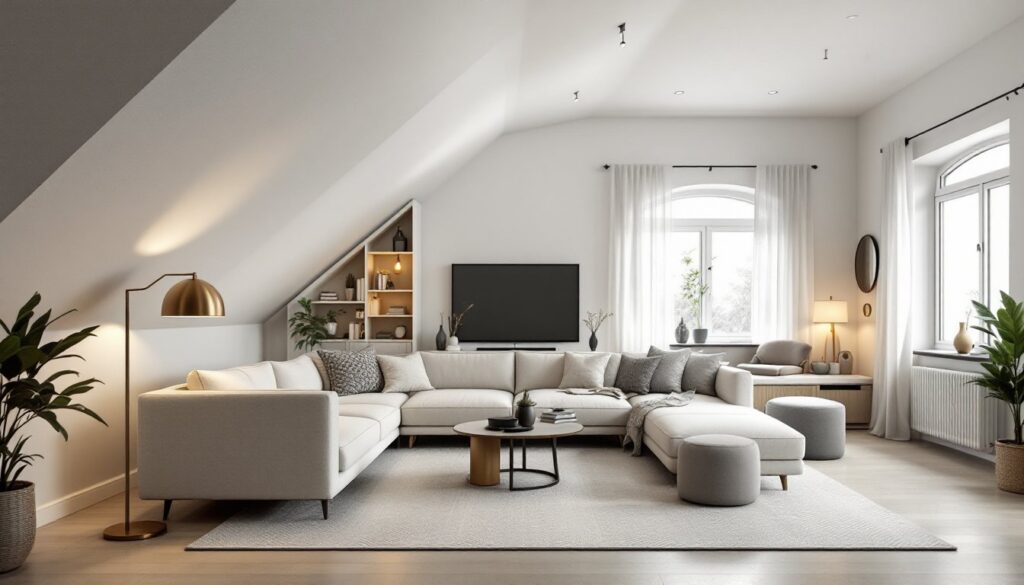
Two-story alcoves or angled ceiling corners need careful furniture selection, stick to pieces with slim silhouettes rather than bulky sectionals. When you’re working with two living rooms next to each other, corner transitions become critical. A console table or slim shelving unit can bridge the visual gap and make the transition feel less abrupt.
Multi-Purpose Furniture Strategies
In an awkwardly-shaped living room, every piece needs to earn its real estate. A coffee table that includes hidden storage, a sofa bed for unexpected guests, or a media console that doubles as a workspace multiplies what your room can do.
Modular and sectional pieces offer flexibility, you can reconfigure them as needs change or as you learn how your particular layout works best. Sectional sofas for small living rooms let you snake around obstacles and fit into corners while maintaining a cohesive seating arrangement. Ottomans with storage, nesting tables, and wall-mounted shelving add function without consuming floor space.
Consider a storage bench along a wall to provide seating, stash blankets and pillows, and define a zone boundary. A side table with drawers works harder than a bare pedestal. When selecting multi-purpose pieces, ensure they’re proportional to your space, oversized “do everything” furniture can overwhelm a room and make awkward layouts feel even tighter. Check assembly requirements and doorway widths before ordering: sectionals and modular pieces need careful route planning.
Visual Tricks to Maximize Your Space
Color, lighting, and mirror placement make a measurable difference in how spacious and cohesive an awkwardly-shaped room feels. Light, neutral wall colors (soft grays, warm whites, pale greiges) and minimal wall décor open up tight corners. Dark walls or heavy artwork can make a space feel smaller and choppy.
Mirrors opposite windows bounce natural light and create the illusion of depth, place them strategically where they reflect light rather than clutter. Vertical elements (tall bookcases, floor-to-ceiling curtains hung just above the frame) draw the eye upward and make ceilings feel higher. A living room with vaulted ceilings benefits from the same principle: emphasize height to downplay awkward floor dimensions.
Lighting layer matters, combine overhead ambient light (ceiling fixtures or recessed lights on a dimmer), task lighting (reading lamps, desk lights), and accent lighting (LED strip behind shelving, wall sconces) to create visual interest and functional flexibility. Resources like Apartment Therapy and Decoist showcase how thoughtful lighting transforms tight layouts. Avoid large, dark window treatments in small awkward spaces, sheer curtains or roman shades let light in while maintaining privacy. A strategically-placed living room with sectional sofas combined with proper lighting can make even a cramped, angled room feel polished and intentional.
Conclusion
Awkward living room layouts are a challenge, not a curse. By identifying your space constraints, floating furniture away from walls, creating functional zones, maximizing corners, choosing multi-purpose pieces, and using visual tricks strategically, you transform a frustrating layout into a room that works for how you actually live. Start with a clear floor plan, move slowly, and don’t be afraid to experiment, your living room layout will evolve as you settle in and learn what fits best.