Table of Contents
ToggleModern organic design is having a moment, and your living room is the perfect place to embrace it. This approach blends contemporary aesthetics with natural materials, muted colors, and a genuine connection to the outdoors, all without feeling staged or overly trendy. Whether you’re starting fresh or refining what you already have, creating a nature-inspired living room is about making intentional choices that feel both calm and livable. The beauty of this style is that it works whether your home is minimalist, eclectic, or somewhere in between.
Key Takeaways
- Modern organic living room design blends contemporary aesthetics with natural materials and muted colors to create a calm, livable retreat that avoids feeling staged or trendy.
- Use authentic materials like real wood, linen, wool, and stone in your living room rather than reproductions; these materials age gracefully and actually improve with use over time.
- Layer textures and earth tones—such as warm whites, soft grays, chocolate leather, and sage green accents—to create visual depth without overwhelming the space.
- Incorporate live plants in clusters of odd numbers using neutral ceramic or concrete pots to improve air quality, add softness, and create a genuine connection to nature.
- Choose warm-white 3000K LED lighting with multiple sources at different levels and dimmers to create soft, natural-feeling illumination that supports relaxation and connection.
Why Modern Organic Design Works for Living Rooms
Modern organic design succeeds because it addresses what most people actually want from a living space: a retreat that doesn’t feel like a showroom. This approach prioritizes quality over quantity, real materials over reproductions, and function over fussiness.
Your living room is where you spend downtime with family, host friends, and recharge after work. A modern organic aesthetic supports all of that by creating a backdrop that’s visually restful without being boring. Natural textures and earthy tones don’t demand attention the way bold patterns or high-gloss finishes do. They let conversation and connection take center stage.
The longevity factor matters too. Trends in interior design shift yearly, but organic materials, real wood, stone, linen, wool, age gracefully and actually improve with use. A leather sofa develops character: a wood table gets a patina. This isn’t about laziness: it’s about choosing pieces that reward you over time rather than looking dated in two years.
Natural Materials and Textures
The foundation of modern organic design is honest material use. This means real wood instead of veneer, linen instead of polyester blends, and stone or ceramic instead of plastic-look alternatives.
Wood and Raw Finishes
Wood is the workhorse of organic living room design. Unlike painted or stained finishes that hide the grain, raw or light-stain finishes celebrate it. A live-edge coffee table or reclaimed wood shelving serves as a focal point because the material itself is the decoration. If you’re building or refinishing, consider leaving edges slightly rough, it adds authenticity and breaks up the “too-perfect” feeling that makes spaces feel staged.
When selecting wood pieces, pay attention to grain direction and color variation. White oak, walnut, and ash are popular for modern organic interiors because their grain patterns are visually interesting without being busy. For shelving or built-ins, nominal 1×12 lumber (actual 3/4″ x 11.25″) works well for open shelving: it has enough visual weight without looking chunky.
If you’re installing wood shelving yourself, ensure proper support. Heavy books and decor require 1/2-inch thick shelves with brackets every 24–32 inches, depending on load. Undersized brackets or spacing that’s too wide will lead to sagging, and that reads as sloppy, not organic.
Layering textures prevents the space from feeling one-note. Pair your wood elements with linen upholstery, wool area rugs, and ceramic or concrete accessories. These materials should show their authenticity: linen wrinkles slightly, wool has variation in tone, concrete has subtle surface texture. That imperfection is the point, it’s proof the materials are real.
Neutral Color Palettes and Earth Tones
Modern organic color schemes lean heavily on neutrals and earth tones, but that doesn’t mean beige everything. The key is depth and nuance within a narrow range.
Start with a base of warm whites, soft grays, or muted taupes for walls. These act as a backdrop, allowing natural light and material texture to take the spotlight. Many homeowners choose off-whites like Benjamin Moore’s White Dove or Sherwin-Williams’ Alabaster because they’re softer than pure white but still bright enough not to feel dingy.
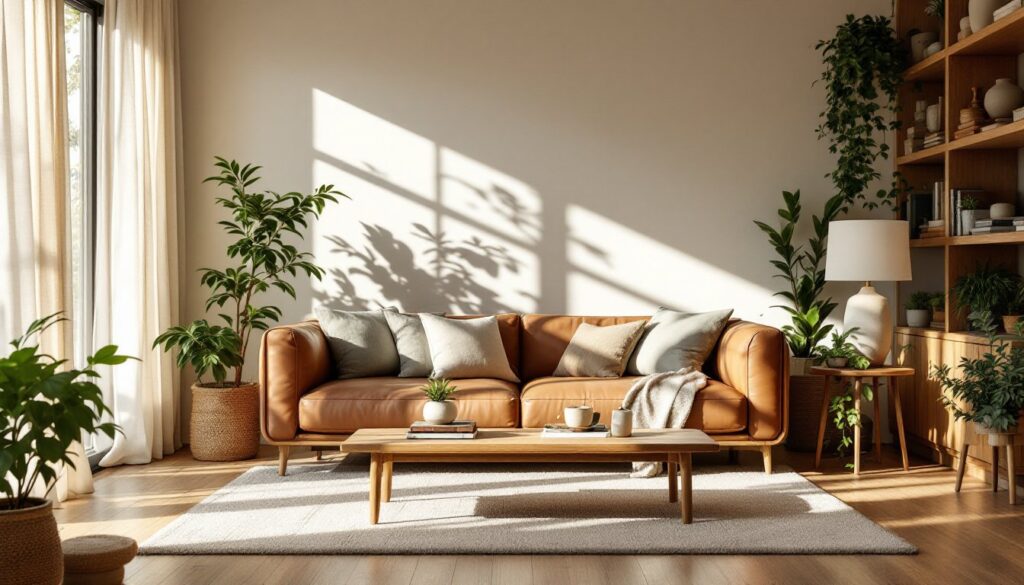
From there, layer in deeper earth tones through larger pieces. Sofa fabric in warm gray, leather in chocolate or cognac, wood shelving in medium to dark tones, these create visual interest and prevent the room from looking washed out. Accent colors should come from nature itself: sage green, warm terracotta, or soft charcoal, introduced through throw pillows, art, or a small accent chair.
When paint shopping, always test samples in your specific lighting. A color that looks perfect under store lighting can feel drastically different when it hits your actual walls. Buy sample quarts, paint 2-3-foot patches, and observe them at different times of day, especially if your room gets strong morning or afternoon light. Organic interiors are sensitive to light changes: you want colors that shift subtly and beautifully, not dramatically.
Bringing Plants and Greenery Into Your Space
Live plants are the signature move in modern organic design, and they serve a practical purpose beyond aesthetics. They improve air quality, add softness to hard edges, and create a genuine connection to nature.
Start with forgiving plants that tolerate indoor conditions. Pothos, snake plants, and Monstera deliciosa thrive with moderate light and irregular watering, realistic for most living rooms. Larger floor plants like fiddle leaf figs or rubber plants create visual weight and fill empty corners effectively. Position them in spots where they’ll actually get light they need: a beautiful plant wilting in the dark corner looks sad, not organic.
Container choice matters as much as the plant. Opt for unglazed ceramic pots, natural wood planters, or concrete vessels in neutral tones. Avoid oversized decorative pots with busy patterns: you’re looking for simple forms that let the plant’s green take center stage. A 12-inch terra cotta pot costs $8–15, a concrete planter runs $15–40, and wooden boxes vary widely depending on construction.
Grouping plants in clusters of odd numbers (3 or 5) creates a more organic look than spacing them evenly. Vary heights using plant stands or shelving so the eye moves through the space. If low light is genuinely an issue, use high-quality grow lights mounted above shelves, they’re becoming less intrusive and can actually work into modern aesthetics when chosen deliberately.
Maintenance note: Overwatering kills more plants than underwatering. Let soil dry out between waterings, and choose pots with drainage holes. If water sits on your floor after watering, you’re either watering too much or your container lacks proper drainage.
Lighting and Sustainable Choices
Lighting in a modern organic room should feel natural, which, ironically, often requires thoughtful artificial choices. The goal is soft, layered illumination that mimics natural light rather than harsh overhead fixtures.
Start by maximizing daylight. Install sheer linen curtains or natural linen shades that filter light without blocking it entirely. These allow you to control glare and privacy while maintaining that connection to the outdoors. Heavier linen curtains in neutral tones work for evening but shouldn’t live permanently closed: organic design celebrates natural light cycles.
For artificial lighting, aim for 3000K color temperature bulbs (warm white) rather than 4000K or 5000K, which feel harsh and sterile. Install multiple sources at different levels: a floor lamp for reading, table lamps on side tables, and dimmable wall sconces or small pendant lights. Avoid one central overhead light, it creates an artificial, unflattering feel. Dimmers are essential: they let you adjust ambiance as daylight fades.
Lamp bases should match your material palette: ceramic, wood, linen shades, brass, or matte metals. Shiny chrome or glass feels too contemporary-slick for organic spaces. A basic ceramic table lamp runs $30–80: budget more for larger floor lamps or custom options.
Sustainability ties into modern organic design philosophically. Choose LED bulbs exclusively, they last 15,000+ hours versus 1,000 for incandescent, use 80% less energy, and emit less heat. A pack of quality LED bulbs costs $10–20 upfront but pays for itself within months. When shopping for furniture and decor, prioritize pieces made from certified sustainable wood, recycled materials, or vintage/secondhand items. This approach aligns your space’s aesthetic with its actual environmental footprint.
Conclusion
Building a modern organic living room isn’t about buying a curated collection or copying an Instagram aesthetic. It’s about selecting real materials, respecting natural light and texture, and creating a space that actually supports how you live. Start with one or two intentional changes, perhaps living rooms with wood floors or investing in quality living room furniture, and expand from there. The beauty of this approach is that good choices compound over time, creating a room that gets better, not tired, as the years pass.