Table of Contents
ToggleYour dining room walls don’t have to be a blank canvas. Whether you’re working with a small dining room wall decor challenge or you’ve got expansive wall space, the right dining room wall decor sets the tone for meals, gatherings, and everyday moments. From gallery walls and statement wallpaper to floating shelves and textured finishes, modern dining room wall decor ideas offer something for every style and budget. This guide walks you through seven actionable approaches to transform your dining area wall decor with confidence, using techniques you can handle yourself or adapt to your comfort level.
Key Takeaways
- Gallery walls are a forgiving, budget-friendly way to add dining room wall decor personality by mixing frame styles, artwork types, and varying spacing based on wall size.
- Statement wallpaper with bold geometrics and jewel tones instantly transforms dining room wall decor; start with a single accent wall rather than committing to all four walls.
- Floating shelves maximize vertical space and serve dual purpose—stylish storage and display—ideal for small dining room wall decor arrangements when installed securely into studs or heavy-duty anchors.
- Paint color significantly influences dining room mood; warm tones like terracotta and sage encourage appetite and conversation, while cool neutrals create calm sophistication.
- Textured wall treatments such as wainscoting, shiplap, and Venetian plaster add architectural interest to dining room wall decor and create a custom-built aesthetic without requiring professional installation for simpler projects.
- Mirrors amplify light and expand perceived space, making them especially effective in smaller dining areas when positioned to reflect natural light, windows, or statement fixtures.
Gallery Walls and Mixed Artwork Arrangements
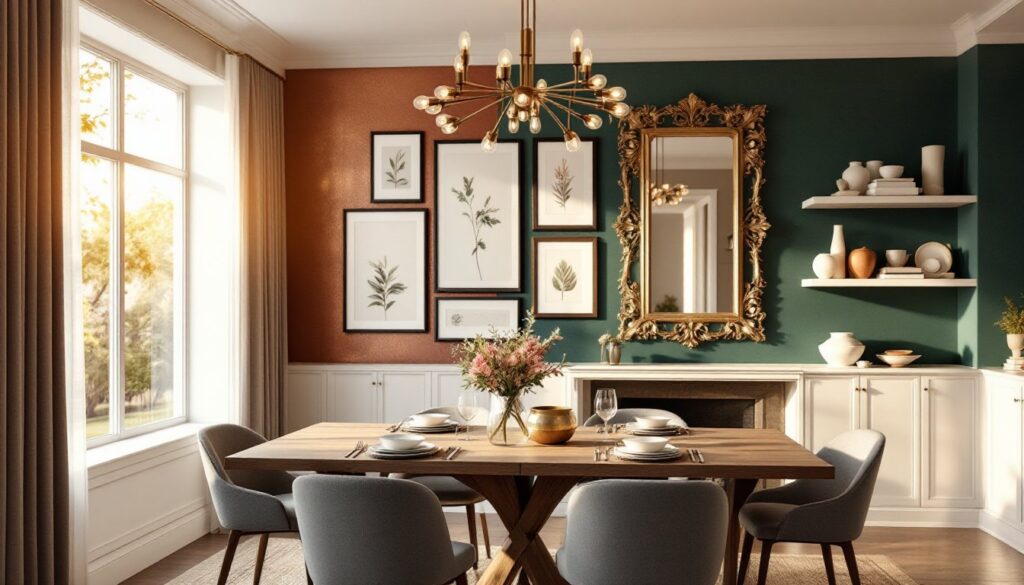
A gallery wall is one of the most forgiving ways to add personality to dining room wall decor. The beauty of this approach is that you control the composition, no designer needed. Start by selecting a mix of frame styles, sizes, and artwork that complements your table and existing furniture.
Measure and map your wall layout on paper first. Sketch the frame positions, then photograph it and tape paper cutouts to the wall before driving a single nail. For a cohesive look, stick to 2–3 frame finishes (matte black, natural wood, and white, for example) and vary artwork: framed prints, small canvases, fabric pieces, and even decorative plates work well together.
Hang frames at eye level when seated at your dining table, typically 57–60 inches from the floor to the center of artwork. Use a level and painter’s tape to mark nail positions. For drywall, standard drywall anchors rated for 25–50 pounds hold most frames securely: studs offer the strongest hold if you’re positioning frames there. Small dining room wall decor arrangements benefit from tighter spacing (2–4 inches between frames), while larger walls can breathe with 4–6 inches between pieces. This approach scales beautifully and costs far less than custom art installations.
Statement Wallpaper and Accent Walls
Statement wallpaper instantly transforms dining room decor wall space, and 2026 trends favor bold geometrics, rich jewel tones, and textured finishes. If committing to a full accent wall feels risky, start with one wall, typically behind the buffet or china cabinet, rather than all four.
Before you buy, measure the wall height and width, add 10% for waste and pattern matching, and calculate square footage. Most wallpaper comes in double rolls (approximately 56 square feet per roll). Strip walls of outlet covers and light switch plates, you’ll reinstall them over the wallpaper using a utility knife to cut out openings.
Prep the wall by filling gaps and sanding smooth with 120-grit sandpaper. Apply a quality primer or wallpaper sizing to ensure adhesion and make future removal easier. Many DIYers hire a professional hanger for rooms with multiple corners, windows, or complex layouts, but flat accent walls are manageable solo with patience. Modern peel-and-stick wallpaper eliminates paste and dries faster, though traditional paste offers more forgiving repositioning time. Elegant dining room wall decor often benefits from patterns with subtle sheen or metallic accents that catch light during evening meals.
Floating Shelves for Style and Storage
Floating shelves merge storage with design, giving dining room wall decor dual purpose. They work especially well in small dining room wall decor schemes where vertical space saves floor area. Shelves also display dishware, glassware, cookbooks, and decorative objects that reinforce your room’s aesthetic.
Start with shelves sized to your wall space: 24–36 inches is ideal for most dining rooms without looking crowded. Install shelves at a consistent height, 36–48 inches from the floor is common, and use a digital level to ensure they’re dead-level before securing brackets.
Floating shelf brackets must attach to wall studs or heavy-duty anchors. Studs are spaced 16 inches on center in most homes: locate them with a stud finder or the knock-and-listen method. Drill pilot holes, install bracket bolts into studs with ½-inch bolts and washers (studs can support 50+ pounds per bracket with proper fastening). If studs don’t align with your desired shelf position, use heavy-duty toggle bolts or molly bolts rated for 25–50 pounds per bolt, use at least two bolts per bracket. Style shelves with varying heights of objects: tall vases, stacked books, small sculptures, and dishware create visual interest without clutter. Modern dining room wall decor using floating shelves trends toward minimalist styling, quality over quantity.
Paint Colors That Set the Mood
The right paint color anchors your dining room and influences how guests feel during meals. Warm tones like terracotta, sage green, and deep burgundy encourage appetite and conversation, while cool neutrals create calm sophistication. Test colors by painting large swatches on different walls and observing them at different times of day, light shifts throughout morning, afternoon, and evening.
Prep walls thoroughly: fill nail holes with spackling compound, sand smooth with 120-grit sandpaper, and dust completely. Apply a quality primer, especially over darker existing colors or glossy finishes, this ensures even coverage and reduces the number of finish coats needed. Most dining room walls need 2 coats of finish paint at 350–400 square feet per gallon (accounting for texture and primer visibility).
Consider sheen carefully: flat or matte finishes hide imperfections but soil more easily around the dining table: eggshell or satin offers easier cleanup and subtle sheen that reflects light subtly. Dining wall decor featuring painted accents, a accent wall behind furniture or trim painted in contrasting color, adds designer appeal without the commitment of full room repainting. Elegant dining room wall decor often uses deep, jewel-toned paint paired with brass or gold trim for a refined, modern look.
Mirrors and Reflective Surfaces
Mirrors amplify light and expand the perceived size of your dining area, especially valuable in smaller spaces. A large mirror opposite a window bounces natural light throughout the room, brightening dining table wall decor while creating an illusion of openness. Leaning a mirror casually against the wall or hanging it in a statement frame both work depending on your style.
When hanging mirrors, use heavy-duty picture hangers or mirror brackets: a 30×40-inch mirror weighs 40–80 pounds depending on glass thickness. For drywall, drill into studs or use heavy-duty anchors rated for 50+ pounds. Position mirrors to reflect artwork, windows, or chandeliers, this creates intentional visual layering rather than random reflection.
Beyond traditional mirrors, consider reflective wallpaper with metallic finishes, mirrored tiles for accent walls, or metallic paint finishes that catch light. These options soften the hard reflection of a full mirror while adding shimmer and depth. Modern dining room wall decor increasingly incorporates mixed finishes, combining reflective surfaces with matte textures creates sophisticated contrast without overwhelming the space. Wall decor for dining room schemes that include mirrors and soft lighting create an elevated, restaurant-quality ambiance at home.
Textured Wall Treatments and Paneling
Textured walls and paneling add architectural interest and tactile depth that smooth paint alone cannot achieve. Board-and-batten paneling, shiplap, or wainscoting transform dining room wall decor from basic to custom-built feeling. Wainscoting (typically 32–48 inches high) works particularly well in formal dining areas: shiplap suits modern and farmhouse styles.
Wainscoting installation involves securing horizontal rails to studs, then attaching vertical boards with adhesive and finish nails. Locate studs first with a stud finder, measure and mark horizontal rail positions, and use a level to ensure perfectly straight installation. Boards must be acclimated to your home’s temperature and humidity for 48 hours before installation, wood expands and contracts with climate changes, and premature installation causes buckling. Use 1¼-inch finish nails and construction adhesive for solid attachment. Paint or stain after installation: primer and 2 coats of finish paint hide nail holes and imperfections.
Shiplap panels interlock for a seamless look and install similarly but require more careful measurement to ensure joints align properly. Textured plaster or decorative wall finishes (like Venetian plaster) create subtle relief without the commitment of full paneling. Professional installation costs $1,200–$3,000+ for a dining room, depending on materials and labor in your area. Elegant dining room wall decor using paneling and modern finishes creates timeless appeal, this trend resurged in 2024–2026 and shows no signs of fading. Interior design tips from trusted design sources confirm textured finishes remain popular for dining spaces.
Conclusion
Dining room wall decor needn’t be complicated. Whether you choose a gallery wall, embrace bold wallpaper, float functional shelves, or add architectural texture, the key is selecting an approach that matches your skill level, timeline, and style. Start with one small project, a single accent wall or simple gallery arrangement, then build from there. Your dining space reflects your tastes and sets the stage for gatherings that matter. With these practical strategies, you’re ready to transform your dining room walls and enjoy the results for years to come.