Table of Contents
ToggleThe living room is where life happens, morning coffee, evening conversations, movie nights. But if your space feels tired or uninspired, a few strategic design moves can breathe new life into it. Modern living room decor in 2026 isn’t about chasing trends that’ll look dated next year. Instead, the focus is on creating rooms that balance beauty with livability, combining thoughtful design choices with practical comfort. Whether you’re starting from scratch or refreshing what you have, these seven design trends offer real, actionable ways to elevate your living room. They’re rooted in materials that last, colors that calm, and layouts that actually work for how people live today.
Key Takeaways
- Modern living room decor prioritizes intentional design choices that balance beauty with livability, moving away from trendy pieces that become dated quickly.
- Minimalist design with functional elegance requires every piece to earn its place by serving a practical or visual purpose, creating spaces that feel larger and less overwhelming.
- Warm neutrals and earthy color palettes like taupe, soft greige, and muted sage greens create inviting, grounded spaces that feel calm and sophisticated.
- Statement lighting fixtures and sculptural designs are now essential design features that anchor modern living rooms, with proper scale and layered lighting types enhancing both mood and functionality.
- Natural materials such as solid wood, linen, wool, and natural stone are non-negotiable for living rooms built to last, developing character and patina over time rather than looking dated.
- Smart storage solutions and layered textures create comfortable, lived-in spaces that feel welcoming while maintaining clean, curated design principles.
Minimalist Design With Functional Elegance
Minimalism isn’t about empty rooms or cold aesthetics. Modern minimalist living rooms embrace “less is more,” but that less must earn its place. Every piece, a sofa, a shelf, a side table, needs to serve a purpose, whether functional or visual.
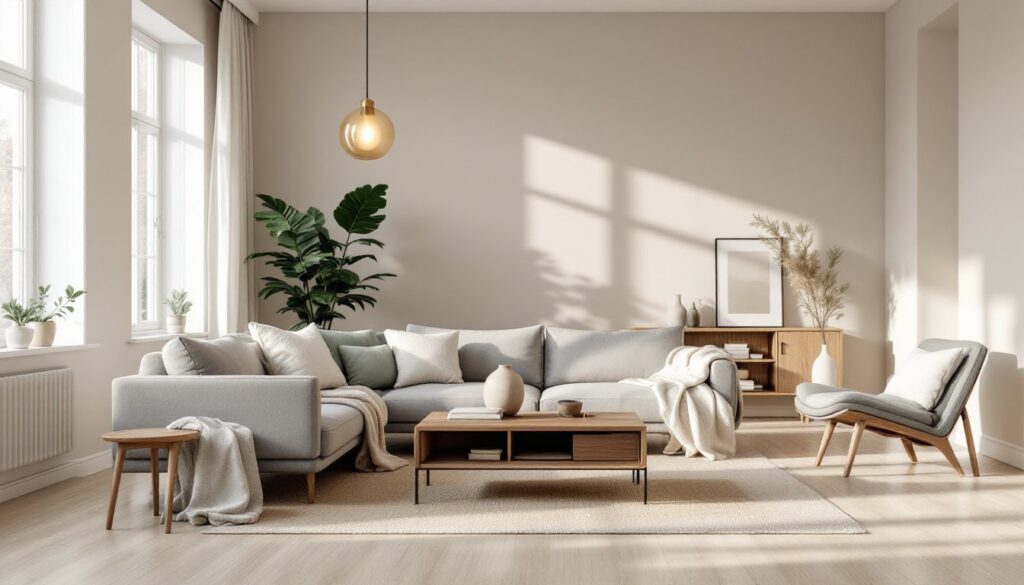
This approach means saying no to clutter and yes to intentional choices. Furniture tends to have clean lines, often with tapered legs that let sight lines flow beneath and around pieces. Walls stay relatively simple, allowing standout elements like a single large-scale artwork or a statement chair to command attention. When you’re selecting pieces, think about negative space as much as what fills it.
The beauty of functional minimalism is that it makes rooms feel larger and less visually overwhelming. Modern living room furniture works best when each piece has a clear role, a coffee table that doubles as storage, a console with drawers, shelving that anchors a wall. Avoid fussy details, ornate carvings, or decorative objects that don’t enhance daily life. Color palettes stay restrained, usually leaning into one or two dominant hues plus neutrals, allowing form and proportion to shine without distraction.
Warm Neutrals and Earthy Color Palettes
Gray and white aren’t dead, but 2026 sees a shift toward warmer, more grounded tones. Warm neutrals, think taupe, sand, soft greige, and creamy ivory, create rooms that feel inviting rather than sterile. These colors work because they mimic natural materials and light without the coldness of true grays.
Earthy palettes introduce subtle warmth through muted terracottas, ochres, and soft sage greens. These aren’t bold accent colors: they’re the foundation. Pairing a sand-colored wall with furnishings in warm grey or sage, then layering in natural wood tones, creates depth and sophistication. The result is a space that feels calm and grounded, almost like it’s been naturally weathered by time.
When painting, one coat rarely cuts it on darker or richer neutrals, plan for two coats minimum, and consider a good primer designed for your wall type (drywall needs different primer than textured walls). Quality paint matters here: premium finishes hide roller marks better and offer superior coverage. Gray sofas work beautifully as anchors in these spaces, and brown sofas pair naturally with earthy palettes too.
Statement Lighting and Sculptural Fixtures
Lighting has moved beyond “functional and forgettable” to being a design feature in itself. Statement fixtures, whether a sculptural pendant, an arched floor lamp, or a chandelier with an unexpected silhouette, now anchor modern living rooms. These pieces are visible, sometimes dramatic, and intentionally designed to catch the eye.
When choosing statement lighting, scale matters. A fixture should be proportional to your ceiling height and room size. A delicate pendant looks lost in a large, high-ceilinged room: conversely, a massive statement fixture overwhelms a smaller space. Consider pendant clusters instead of a single oversized piece if you’re working with a standard 8–9 foot ceiling.
Layer different light types: ambient (ceiling fixtures for overall brightness), task (for reading or focused work), and accent (highlighting art or architectural features). Smart dimmer switches let you adjust intensity throughout the day, and the right bulb temperature (warmer 2700K for living rooms, not harsh daylight 5000K) sets mood. Brass, matte black, and sculptural wood bases dominate 2026’s fixture designs, all conveying intentional, contemporary style.
Natural Materials and Sustainable Decor
Solid wood, linen, wool, and natural stone aren’t trending, they’re becoming non-negotiable for living rooms built to last. These materials age gracefully, develop patina, and often become more beautiful over time rather than looking dated. A wood coffee table made from solid walnut or oak will outlive three particle-board alternatives, and it costs less per year of use.
Sustainable decor choices mean buying fewer, better pieces. A vintage or second-hand sofa upholstered in linen outlasts fast-furniture knock-offs. Natural fiber rugs, jute, sisal, wool, wear in rather than wear out. Wood shelving and live-edge accents bring warmth and authenticity. Stone accents, whether in fireplace surrounds or side tables, add permanence and elevate the entire room’s feel.
Look for certifications like FSC (Forest Stewardship Council) on wood products and natural fiber content on textiles. These signals indicate materials sourced and produced responsibly. Companies like Dwell showcase modern living rooms that prove natural materials are the backbone of timeless design. The cost upfront is often higher, but the longevity and character far exceed cheaper alternatives.
Layered Textures and Comfort-First Styling
Modern living rooms are finally embracing coziness without sacrificing style. Layered textures mean combining different finishes and materials in one space: a linen sofa paired with a chunky knit throw, a smooth ceramic vase alongside rough-hewn wood, soft area rugs over polished wood floors. Texture adds visual interest, makes rooms feel lived-in, and, crucially, makes them more comfortable.
Comfort-first styling is the counterpoint to minimalism’s sterility. It says: yes to extra pillows arranged naturally rather than in museum-piece precision. Yes to blankets draped over chair arms. Yes to layering rugs for warmth and sound absorption. This approach works because people actually live in these rooms, and they should feel inviting to sink into a seat, not perform-ready.
Area rugs define spaces and add softness, while larger rugs anchor seating arrangements. Mix matte and slightly glossy finishes, pair smooth upholstery with tactile materials like cork or rattan, and introduce unexpected textures through art, plants, or decorative accessories. The goal is a room that looks curated but feels welcoming, a place where you actually want to spend time.
Smart Storage Solutions and Built-Ins
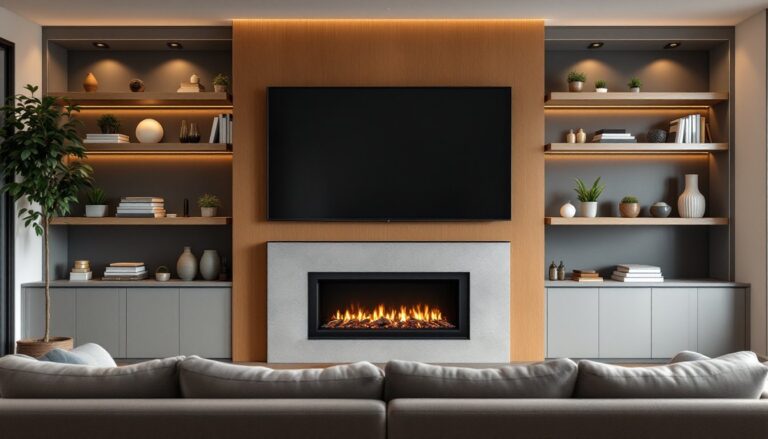
Clutter is the enemy of modern design, so smart storage isn’t a luxury, it’s a necessity. Custom or semi-custom built-ins (shelving, cabinetry, desk nooks) maximize vertical space and eliminate visual noise while displaying curated collections thoughtfully. Floating shelves work well for lighter loads: wall-mounted cabinets with doors hide what you don’t want visible.
Consider your room’s traffic flow and sight lines when planning storage. Low, open shelving works best at eye level where you can see through it (keeping perceived clutter minimal). Closed storage at higher levels handles less-attractive items. Storage ottomans, coffee tables with drawers, and media consoles with built-in shelving serve double duty, reducing the number of separate pieces needed.
Wall-mounted solutions are especially smart in smaller spaces because they don’t occupy floor area. Shelving should be rated for the load you’re placing on it (books are heavy), and secure mounting with appropriate wall anchors or studs is non-negotiable. Interior design for living rooms increasingly centers on integrated storage that looks intentional rather than utilitarian. Styling a living room means making every element work visually and functionally, and good storage makes that possible.
Conclusion
Modern living room decor in 2026 is about intention, not impulse. Choose pieces that serve you, functionally and visually, rather than chasing what looks good in photos. Layer comfort with clean design, invest in natural materials that age well, and create spaces where your actual life happens. These trends aren’t prescriptive: they’re a foundation. Start with one or two and build from there. Resources like MyDomaine and House Beautiful offer endless inspiration, but remember: the best living room is the one you actually enjoy living in.