Table of Contents
ToggleFinding the right modern chair for your living room can feel overwhelming when you’re faced with endless options and conflicting advice. A great modern chair isn’t just furniture, it’s an investment in how you actually live, whether you’re curling up with a book, hosting guests, or creating a focal point that ties the whole room together. In 2026, modern chair design balances sleek aesthetics with genuine comfort, and you don’t need a designer’s budget to pull it off. This guide walks you through choosing, styling, and maintaining modern chairs that work for your space and your lifestyle.
Key Takeaways
- Modern chairs for living room come in distinct styles—Scandinavian, industrial, contemporary, and mid-century modern—each with unique aesthetic and functional qualities.
- Proper measurement of your living room layout, doorways, and traffic flow is essential before selecting a modern chair to ensure it fits both physically and visually.
- Upholstery material choice significantly impacts durability and maintenance; performance fabrics offer stain resistance ideal for active households, while leather and wool provide longevity with higher costs.
- Comfort is non-negotiable and personal—test chairs in-store for at least 15 minutes, prioritizing proper seat height (16-18 inches), depth (20-24 inches), and back support aligned with your usage.
- Budget-conscious shoppers should prioritize solid wood or eight-way hand-tied frames over cosmetic appeal, as frame quality directly determines a modern chair’s lifespan and can be reupholstered for $300-600 later.
- Style your modern chair through intentional color contrast, layered textures, and strategic lighting placement rather than matching everything, creating visual rhythm and preventing a cluttered appearance.
Understanding Modern Chair Styles and Design Trends
Modern chairs come in several distinct flavors, and knowing the difference helps you spot what actually works for your space. The term “modern” is broad, it can mean anything designed in the last few decades, so understanding specific substyles is key.
Different modern styles dominate today’s market. Scandinavian design prioritizes clean lines and natural materials, often featuring tapered legs and neutral upholstery. Industrial modern mixes metal frames with leather or canvas, drawing from warehouse aesthetics. Contemporary designs are fluid and often experimental, with curves, asymmetry, or mixed materials. Mid-century modern remains beloved for its balance of function and form, though 2026 trends lean toward updated versions rather than direct reproductions.
Minimalist and Mid-Century Modern Designs
Minimalist modern chairs strip away ornament and focus on essential form. Think low-profile frames, neutral colors, and legs, lots of visible legs. These chairs work brilliantly in compact spaces because they don’t visually clutter a room. A simple wooden or metal frame with a linen seat reads cleaner than an overstuffed silhouette.
Mid-century modern chairs are experiencing a resurgence, but today’s versions often lean toward reissues and inspired designs rather than vintage originals. Eames-style shells, Wegner-inspired wishbone chairs, and Bertoia-adjacent wire frames remain popular because their proportions genuinely suit human bodies. Look for chairs with angled legs, sculptural wood backs, and modest seat depths, typically 20 to 24 inches deep. These designs pair well with modern chairs for living room aesthetics that emphasize both form and function. The beauty here is that you’re not paying 1980s auction prices: affordable versions exist that capture the spirit without the collector’s premium.
How to Choose the Right Modern Chair for Your Space
Before you fall in love with any chair, measure your living room and be honest about how you’ll use it. A stunning sculptural piece that doesn’t fit your doorway or dominates an already crowded corner isn’t a win.
Measuring and Assessing Your Living Room Layout
Start with the basics: the room’s overall dimensions and your existing furniture footprints. Modern chairs typically range from 28 to 36 inches wide, 30 to 38 inches deep, and 28 to 36 inches tall. These nominal measurements matter because an accent chair that eats 3 feet of floor space feels different in a 12-by-14-foot room than a 16-by-20-foot living room.
Measure doorways and hallways where the chair must pass. Width matters most: tilting a chair at an angle gets you past tight spots, but check diagonal measurements if you anticipate moving it later. Account for the chair’s leg extension, some modern designs have splayed or prominent feet that extend beyond the seat’s footprint.
Consider traffic flow and sightlines. A chair positioned across a doorway creates an obstacle and visually breaks up the room. Placing it in a corner or along a wall, angled slightly toward a window or conversation area, feels more intentional. Think about whether this chair will be a statement piece or part of a seating ensemble. Living Room Furniture Ideas can help you visualize arrangements, or simply photograph your room from multiple angles and sketch where the new chair fits.
Don’t forget clearance around the chair. Most designers recommend at least 18 inches of walking space on sides, and enough room to pull the chair out if needed. If your living room serves double duty as a work area or guest space, that clearance becomes even more critical.
Material and Comfort Considerations
Material choice drives both durability and comfort. Modern living room chairs are typically upholstered in linen, cotton blends, wool, leather, or performance fabrics. Each has trade-offs worth understanding before you buy.
Linen is breathable and softens beautifully over time, but it wrinkles easily and shows dust. Cotton blends offer a similar feel with better stain resistance, making them practical for households with kids or pets. Wool is durable, naturally fire-resistant, and resists odor, though it’s pricier. Leather brings sophistication and cleans easily with a wipe-down, but it costs significantly more and can feel cold or sticky depending on the room’s humidity and temperature.
Performance fabrics, synthetic blends engineered to repel spills, have improved dramatically. Modern brands now produce performance upholstery that doesn’t feel plasticky, making these ideal for active households. Expect to pay slightly more upfront but recoup that investment through longevity and reduced cleaning stress.
Comfort is non-negotiable, and it’s personal. Seat height should allow your feet to rest flat on the floor or a low ottoman when you’re seated: 16 to 18 inches from floor to seat surface is standard. Seat depth matters too, shallower seats (20-22 inches) feel more formal and suit smaller frames, while deeper seats (24+ inches) cradle you but might overwhelm petite rooms. Back support should match your intended use. A chair with an upright back works for reading or focused activity: a reclined back feels cozier for lounging. Visit furniture stores or friends’ homes and sit in chairs for a few minutes. That discomfort you feel after 15 minutes? It won’t improve at home. How to Style a Living Room includes guidance on matching furniture comfort to your daily habits.
Budget-Friendly Options Without Sacrificing Style
Modern chairs don’t require a five-figure budget. Smart shopping means knowing where to splurge and where to compromise.
Mid-range retailers like Article, West Elm (their outlet section especially), and CB2 offer solid designs at 40-60% less than high-end furniture brands. These pieces balance style and durability well: you’re getting decent wood frames, fabric that lasts several years, and designs that won’t look dated in two seasons. Budget chains like IKEA and Wayfair offer hits and misses, read reviews carefully and understand return policies. Many online retailers allow 30-day returns, giving you time to test the chair in your actual space.
When budget-hunting, prioritize frame quality over everything else. A solid wood or eight-way hand-tied frame will outlast cheap plywood by years. Check product descriptions for these details: you shouldn’t have to guess. Upholstery can be replaced or recovered later (figure $300-600 for professional reupholstering), so a structurally sound chair with so-so fabric is a better bet than a beautiful-looking chair with a particle-board frame.
Consider secondhand markets and Facebook Marketplace, especially for mid-century designs. Vintage furniture often has better frames than comparable new budget pieces. Just inspect for structural damage, test the springs if visible, and plan for professional cleaning if needed. Rooms to Go Living Room Sets Under $1000 explores full room packages, but often you’ll save more by cherry-picking individual pieces. Sales cycles matter too, furniture retailers discount most heavily in late August (back-to-school spillover) and January. Patient shoppers can knock 20-30% off regularly marked prices.
Styling Your Modern Chair With Existing Décor
A great modern chair only sings when it complements the room around it. Styling is less about matchy-matchy and more about intentional contrast and balance.
Color is the easiest lever. Neutral chairs (cream, gray, taupe, black) work as blank canvases and pair with nearly anything: use throw pillows to inject personality without committing fabric. A bold color chair, jewel tones like emerald or sapphire, warm terra cotta, or even hot pink, becomes a focal point and works best if your walls are neutral and existing furniture is understated. If your sofa is already busy or heavily patterned, a solid-color modern chair in a complementary hue prevents visual chaos.
Proportions and negative space matter more in modern design than in traditional styles. A low-slung chair paired with tall bookcases or large abstract art creates visual rhythm. An angular modern chair next to curved furnishings provides contrast. Spacing counts too, don’t cluster everything. Leave breathing room between seating pieces so the room feels curated, not packed.
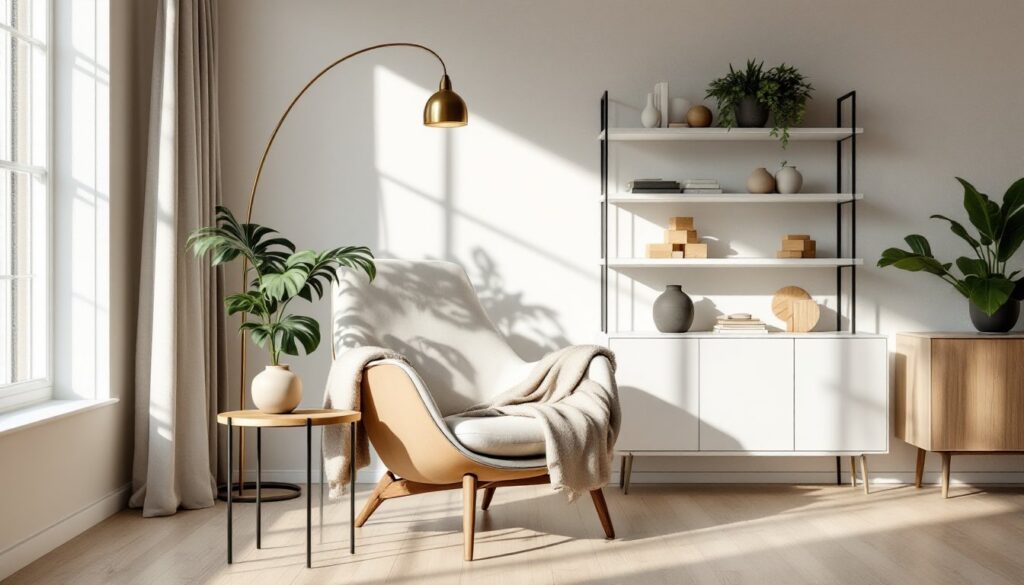
Layering texture is where minimalist spaces come alive. A linen chair with a wool throw, a metal floor lamp, concrete side table, and wooden wall shelving create richness without fussiness. Interior Design for Living Rooms dives deeper into coordinating styles, but the principle is simple: pick two or three materials (wood, metal, stone, ceramic) and repeat them across the room. Your modern chair should align with these choices.
Lighting is underrated. A modern chair positioned under a statement pendant light or beside a sculptural floor lamp gets elevated instantly. Practical task lighting, a small table lamp beside the chair, signals that this is a functional seating spot, not just decoration. 19 Comfy Accent Chairs showcases chairs styled with complementary accessories, offering visual inspiration when you’re stuck. Scale your styling to the chair’s prominence. A quiet mid-size chair might just need a throw pillow or two. A statement sculptural chair deserves a curated moment, clear floor space, minimal clutter, and perhaps a side table with a sculptural object or fresh greenery.