Table of Contents
TogglePicking the right chair for your living room is about more than just finding somewhere to sit, it’s about anchoring the room’s entire aesthetic. Modern living room chairs have evolved far beyond basic functionality: they’re now statement pieces that reflect your personal style while serving the practical needs of daily comfort. Whether you’re working with a minimalist apartment, a mid-century inspired home, or something entirely your own, the right contemporary chair can tie a room together and create a focal point that guests notice the moment they walk in. This guide walks you through seven key modern chair styles to help you choose what works best for your space.
Key Takeaways
- Modern living room chairs serve as statement pieces that anchor your room’s aesthetic while balancing form, function, and personal style.
- Minimalist chairs with clean lines and neutral colors remain timeless because they don’t compete for visual attention and pair seamlessly with existing furniture.
- Mid-century modern seating combines organic curves and quality construction with superior comfort, making it a versatile choice that feels both nostalgic and completely current.
- Contemporary accent chairs in bold colors and unique textures create instant room focal points but work best when paired thoughtfully with neutral sofas that provide a visual canvas.
- Sustainable modern living room chairs built with FSC-certified wood, organic fabrics, and quality construction outlast cheaper alternatives and offer long-term value.
- Measure doorways, seat depth, armrest height, and room clearance before purchasing, and use painter’s tape to outline your chair’s placement and prevent costly layout mistakes.
Minimalist Design Chairs: Clean Lines and Functionality
Minimalist chairs strip away excess and focus on pure form and function. These pieces typically feature straight edges, neutral colors, blacks, whites, grays, and natural wood tones, and very little ornamentation. The appeal is timeless: a well-crafted minimalist chair works in nearly any room without competing for visual attention.
What makes minimalist chairs work is their geometry. Think sleek profiles, tapered legs, and upholstery in solid fabrics rather than patterns. Materials matter here: quality plywood frames with high-density foam cushioning ensure durability without visual bulk. Many minimalist chairs use engineered wood or metal bases, keeping weight distribution stable while maintaining a light visual presence.
The practical advantage? These chairs are easy to move, don’t visually clutter a space, and pair seamlessly with living room furniture ideas you already own. A minimalist accent chair in charcoal works equally well next to a sectional or as a paired set flanking a window. Because they’re not trendy, they’re timeless, you won’t feel the urge to replace them in two years.
Mid-Century Modern Seating: Timeless Appeal for Today’s Homes
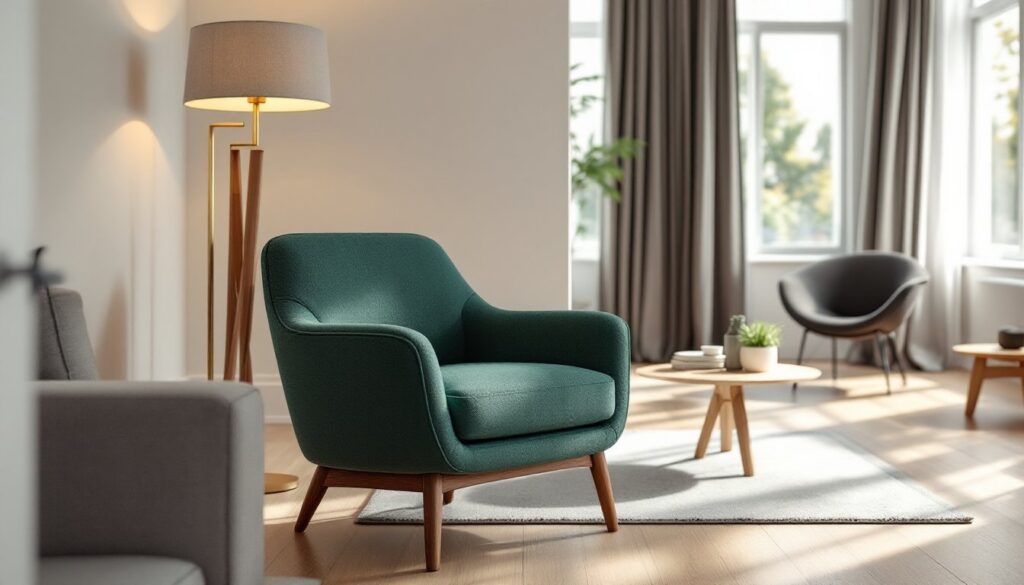
Mid-century modern chairs tap into design principles from the 1950s and 1960s, but they feel completely current. These pieces combine organic curves, tapered wooden legs (often in walnut or teak), and upholstery in both solid and patterned fabrics. Eames-inspired lounge chairs, barrel chairs with rounded backs, and low-slung recliners all fall into this category.
What distinguishes mid-century design is its balance between form and comfort. A proper mid-century chair typically has a lower seat height (around 16 to 18 inches), deep seat depth, and slightly angled backrest that actually supports you. The construction often uses eight-way hand-tied springs or sinuous steel springs beneath the cushion, providing support that budget chairs simply can’t match.
Mid-century pieces pair naturally with warm wood tones and work beautifully in homes emphasizing interior design for living rooms with vintage-modern vibes. The design language feels nostalgic without being kitschy, making it especially popular right now. If you’re drawn to chairs with visible legs, curved silhouettes, and that “vintage-yet-modern” quality, mid-century modern is your style.
Contemporary Accent Chairs: Statement Pieces That Define Your Room
Contemporary accent chairs are where personality shines. These pieces don’t apologize, they’re bold, sometimes sculptural, and designed to be noticed. They might feature jewel-tone fabrics (emerald, sapphire, rust), interesting textures like boucle or performance velvet, or unexpected silhouettes that challenge what a chair “should” look like.
Contrary to minimalism, contemporary accent chairs often embrace color and pattern. A burnt orange chair with wavy armrests, a blush-pink barrel chair, or a navy wingback with brass nailhead trim become instant room anchors. The key is intentionality, these chairs are chosen because they make a specific design statement, not because they were the cheapest option.
When selecting a statement chair, consider what’s already in your room. Gray sofas in living rooms create a neutral canvas that allows an accent chair to shine. Alternatively, if your sofa is the bold piece, your accent chair should complement rather than compete. Performance fabrics, treated to resist staining while maintaining softness, are practical here, especially if you have kids or pets. These chairs work well as one-off pieces or in coordinating pairs, depending on your layout.
Sustainable and Eco-Friendly Chair Options
Eco-conscious design isn’t a niche anymore, it’s essential for many homeowners. Sustainable chairs use responsibly sourced wood, low-VOC (volatile organic compound) finishes, and upholstery made from organic cotton, linen, or recycled polyester. Brands increasingly offer transparency about their supply chains and manufacturing practices.
What does sustainable actually mean here? Real wood frames (not particleboard), sustainably harvested hardwoods for legs and structure, and non-toxic adhesives throughout. Look for certifications like FSC (Forest Stewardship Council) for wood or GOLS (Global Organic Latex Standard) for cushioning. Recycled or deadstock fabrics, end-of-bolt materials that would otherwise go to waste, offer environmental benefits without sacrificing aesthetics.
Durability is perhaps the most sustainable choice of all. A well-made chair you keep for 15 years beats replacing a cheap one every three years. Many eco-conscious makers offer repair services and replacement cushions, extending a chair’s lifespan. Articles on modern design inspiration frequently showcase sustainable furniture that looks just as polished as conventional options. Investing in quality, responsible production often costs more upfront but pays dividends in longevity and peace of mind.
Choosing the Right Modern Chair for Your Space
Selecting a chair means evaluating your actual room, not a Pinterest fantasy. Consider traffic flow: a chair shouldn’t block sightlines or require a furniture shuffle every time someone needs to move. Think about how light hits your space at different times: an upholstered chair in a darker color absorbs light, while light fabrics or leather reflect it.
Comfort is non-negotiable. Sit in a chair before buying if possible, or understand return policies thoroughly. Seat depth, armrest height, and backrest angle vary significantly. Some people need firm support: others want to sink in. There’s no universal “comfortable,” which is why specifications matter, ask for measurements before committing.
Budget considerations vary widely, but don’t confuse price with value. A $500 chair with 10-year longevity is smarter than a $200 chair requiring replacement in four years. Rooms to Go living room sets offer structured pricing, while other retailers spread options across multiple price points for comparison.
Measuring and Layout Considerations
Before purchasing, measure your space carefully. Note the width of your doorways, your chair has to fit through them. Standard armchair widths range from 28 to 36 inches: deep-seated chairs may need 30+ inches of depth. Clearance from walls matters too: you typically want at least 12 inches between the chair back and a wall for comfortable spacing and traffic flow.
Consider sight lines from other seating. If you’re pairing a chair with a sofa, they shouldn’t block each other. An accent chair works best positioned at a 45-degree angle to the sofa or angled toward a focal point like a fireplace or large window. Use painter’s tape on your floor to outline the chair’s footprint before delivery, a simple step that prevents layout regrets. Pictures of living rooms with brown sofas demonstrate how thoughtful positioning creates inviting, balanced compositions.
Don’t forget electrical needs if you want a power recliner or heated massage feature. Have outlets mapped before purchase, and factor in cord routing into your layout plan. Finally, consider any room styling elements, window treatments, shelving, lighting, that might influence chair color or style choices.
Conclusion
Modern living room chairs represent a perfect intersection of form, function, and personal expression. From minimalist elegance to bold contemporary statements, there’s a style to match every home and preference. The best chair isn’t necessarily the most expensive or the trendiest, it’s the one that fits your space, supports your comfort, and makes you genuinely happy to sit in it. Take time measuring, researching, and testing before you buy. Your living room is where life happens, and the right chair makes that space work better.