Table of Contents
ToggleCurtains are one of the most impactful, and often overlooked, elements in a living room. They control light, frame windows, soften acoustics, and set the mood for your entire space. Whether you’re after drama, serenity, or something in between, the right curtain choice can anchor your room’s design and tie everything together. This guide walks you through 15 tested living room curtain ideas, from timeless classics to bold contemporary designs. You’ll learn how to pick fabrics, layer textures, choose colors that work, and hang curtains for maximum visual impact. No interior design degree required, just honest advice on what actually works.
Key Takeaways
- Living room curtain ideas should balance light control, aesthetic impact, and fabric quality—from classic linen drapes to modern flat-panel designs that suit your specific style.
- Install curtain rods high (4–6 inches above the window) and wide (8–12 inches beyond the frame) to make windows appear taller and rooms feel larger, then hang curtains floor-length for an intentional, elongated look.
- Layer lightweight sheers with heavier panels in complementary colors or textures to create visual depth and flexibility, giving you light control by day and complete darkness at night.
- Choose colors based on room light and psychology: warm neutrals expand spaces, cool grays and blues calm rooms, while dark colors create drama but require sufficient natural light.
- Invest in quality fabrics like linen, high-thread-count cotton, or linen-blend blends that hang beautifully and last a decade, and add blackout or thermal linings for enhanced functionality.
- Test fabric swatches in your actual lighting and measure carefully before ordering, because curtain mistakes are both expensive and visible daily—prioritizing timeless quality over fleeting trends.
Classic and Timeless Curtain Styles
Classic styles never go out of fashion because they’re rooted in proportion, quality materials, and restraint. Floor-to-ceiling linen drapes in neutral tones, cream, taupe, or soft gray, are the workhorse of formal living rooms. They hang straight, filter light elegantly, and pair with nearly any furniture or wall color. Pair them with simple rod-and-ring hardware in brushed nickel or matte brass for a polished look.
Damask or subtle jacquard patterns on heavier fabrics bring texture without shouting. These weaves catch light differently depending on the angle, adding visual interest without loud color. Inverted pleats at the top (instead of gathered fabric) create clean lines and a more tailored appearance.
For a softer take, tab-top curtains with simple fabric loops sewn to the top give a relaxed, cottage feel while still looking intentional. They work especially well in spaces paired with living room furniture ideas that lean casual or farmhouse. Avoid thin, transparent fabrics for this style, mid-weight cotton or linen-blend performs best.
Modern Minimalist Designs for Contemporary Living Rooms
Modern living rooms thrive on simplicity, clean geometry, and purposeful restraint. Flat-panel curtains in solid colors (black, charcoal, or deep navy) hung from sleek ceiling-mounted tracks create an architectural effect that feels current and intentional. Panel systems allow you to slide them completely off-window during the day, revealing unobstructed views.
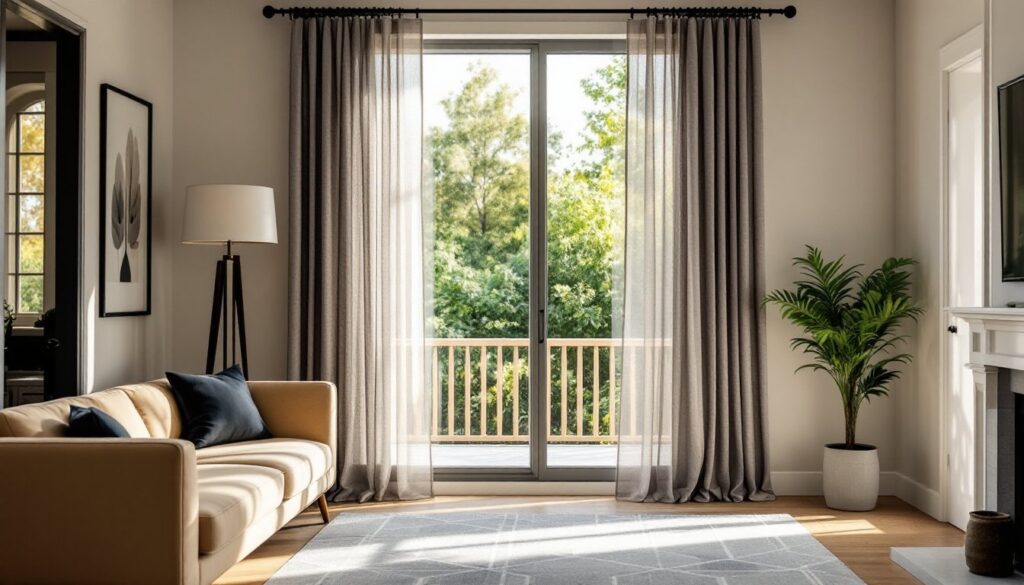
Sheer linen panels layered with a solid blackout shade behind them give you flexibility: filtered light by day, complete darkness at night, and visual lightness that modern spaces demand. The sheer fabric should be almost weightless, heavy sheers read as dated.
Asymmetrical designs, hanging curtains on only one side of a window or at varying heights, break up the grid of a room with contemporary furniture. This works especially well in open-plan spaces or when you want to emphasize an asymmetrical window layout. How to style a living room with minimal clutter also means choosing hardware that disappears: matte black rods and invisible mounting brackets keep the focus on the fabric and light, not the hardware itself.
Layering and Mixed Textures for Visual Depth
Layering is where curtain design gets interesting. Combine a lightweight linen sheer with a heavier linen or wool-blend panel in a complementary or contrasting color. This gives you light control, depth, and texture, three things that make a room feel designed rather than decorated.
Mixing textures also works: pair smooth cotton sateen panels with a chunky linen under-layer, or overlay a gauzy cotton voile over a solid linen-wool blend. Each layer catches light slightly differently, creating a visual richness that photographs well and feels substantial in person.
Texture mixing is particularly effective in spaces with minimal wall decoration. If your walls are plain, your curtains can carry more of the visual load. Layering curtains in your living room connects to interior design for living rooms principles: balance complexity and simplicity. One loud pattern plus one solid, or two neutrals with different weaves, beats a single flat panel every time. Avoid pairing more than two patterns unless one is significantly smaller in scale (like a thin stripe combined with larger geometric shapes).
Color Palettes and Pattern Selection
Color psychology matters, and curtains dominate your wall space. Warm neutrals (cream, warm gray, taupe) expand the room visually and pair safely with most furniture. Cool grays and soft blues calm the space and work especially well in rooms with north-facing windows. Dark, saturated colors, charcoal, forest green, or navy, create drama but need enough natural light to avoid feeling cave-like.
Pattern rules are simple: if your sofa, rug, or wall art carry pattern, keep curtains solid or choose a simple texture. If your room is mostly solid, curtains are the perfect place to introduce pattern. Stripes are the safest pattern, vertical stripes feel formal, horizontal stripes feel casual. Geometric patterns (damask, ikat, or abstract) feel more contemporary. Florals work in traditional or cottage settings but can feel dated in modern spaces unless they’re very large-scale and clearly intentional.
Pattern scale matters enormously. Large-scale patterns overwhelm small rooms: tiny patterns read as busy noise from a distance. A mid-scale pattern in a 10-by-15-foot room is almost always the right call. Test fabric swatches at home in your actual lighting before committing, what looks good in a showroom might feel wrong under your overhead lights or windows. Energize your living room with color by choosing hues that complement your floor, furniture, and existing art.
Fabric Types and Practical Considerations
Fabric choice determines both how your curtains look and how they perform. Linen is the gold standard: it hangs beautifully, filters light in a flattering way, and ages gracefully with a soft crease pattern that reads as intentional. It wrinkles naturally, that’s part of its appeal, and costs more upfront but lasts a decade with basic care.
Cotton is more affordable, durable, and available in a wider range of colors and patterns. A high-quality cotton (400+ thread count) holds up to frequent washing and sun exposure without fading quickly. Linen-cotton blends split the difference: they’re durable, hang well, and cost less than pure linen.
Polyester blends offer stain resistance and easier cleaning, making them practical for households with kids or pets. Look for quality blends that incorporate at least 50% natural fiber so the fabric doesn’t feel plastic-y. Wool or wool-blend fabrics are luxurious, naturally fire-resistant, and excellent insulators, but they’re expensive and require dry cleaning.
Blackout linings are essential if you need complete darkness for sleep or media viewing. They’re applied to the back of curtains and block 99% of light. Thermal linings add insulation, reducing heating and cooling costs, they’re worth the investment in older homes or harsh climates. Ask your fabricator about weighted hems, especially for floor-to-ceiling panels: they help curtains hang straight and look finished. Standard weight is 4-8 ounces per yard. Quality hardware matters too: cheap rods flex under the weight of heavy fabric, creating uneven drapes. Invest in rods rated for your fabric weight.
Styling Tips for Maximum Impact
Install curtain rods high and wide. This is the single most important trick professional designers use. Mounting rods 4-6 inches above the window frame (or ceiling, if you have high ceilings) makes windows appear taller and rooms feel larger. Extend rods 8-12 inches beyond the window frame on each side so curtains can pull completely clear of glass.
Hang curtains to the floor, not the sill. Floor-length curtains (ending 1/2 inch above the floor) elongate the wall and feel intentional. Puddle (extra length pooling on the floor) works in formal, low-traffic spaces but collects dust and feels fragile for most living rooms. Puddle is more suited to dramatic entryways or dining rooms.
Stagger multiple panels or use a mix of sheers and solids when you have wide windows or a wall of glass. Pictures of living rooms with brown sofas often show dual-panel systems, one sheer, one solid, that let you adjust light without sacrificing style. A professional curtain rod designer at a fabric or home store can help you calculate yardage and panel width for your specific windows. Measure from the top of the mounting rod to 1/2 inch above the floor, and add extra length for fullness (generally 1.5 to 2 times the window width, depending on the fabric weight and style).
Hardware visibility matters. Ornate, decorative rods announce themselves: simple, minimal rods fade into the background. Choose finishes that echo other metals in the room, brass hardware if you have brass lamps, matte black if your door handles are matte black. Consistency feels designed: mismatched finishes feel accidental.
Conclusion
Living room curtains are a permanent investment in comfort and design. Take time choosing fabric, test colors in your actual light, and measure carefully before ordering. A mistake in curtain choice is expensive and visible every day, so err on the side of classic over trendy. Whether you select mansion living rooms inspired luxury or simple, clean-lined panels, quality fabric and proper installation will reward you for years. Your curtains don’t have to match your sofa or follow a rigid design rule, they just need to reflect how you actually live and what makes your living room feel like home.