Table of Contents
ToggleA fireplace is rarely just functional, it’s the anchor around which a living room naturally organizes itself. Whether it’s a traditional wood-burning insert, a gas unit, or a sleek electric model, the fireplace commands visual attention and sets the tone for how furniture, traffic flow, and décor work together. Getting the layout right means balancing this powerful focal point with seating comfort, conversation zones, and practical sightlines to entertainment systems or windows. This guide walks homeowners through proven arrangement styles, layout principles, and real-world strategies to make their fireplace-centered living room both inviting and functional.
Key Takeaways
- A fireplace is the natural focal point that anchors your living room layout, so position seating 7–9 feet away to allow viewers to enjoy the flames without discomfort and prevent the room from feeling cramped.
- Choose between traditional symmetrical arrangements (matching pairs and balanced furniture) or modern asymmetrical layouts (varied heights and textures) depending on your room shape and design preference.
- Maintain clear traffic flow by positioning furniture in clusters and routing foot traffic around (not across) the hearth, while keeping seating oriented to encourage conversation and natural eye contact.
- Avoid placing your TV directly above or in front of the fireplace to prevent heat damage and awkward viewing angles—mount it on an adjacent wall instead for better functionality.
- Layer your living room with purposeful lighting (wall sconces, task lighting, and accent lights), minimal mantel décor, and textures in rugs and textiles that echo the fireplace’s warmth without competing with its visual dominance.
- Measure your fireplace proportions, account for windows and natural light, and resist over-accessorizing immediately; live with your layout for a month before adding area rugs and décor that truly suit your space.
Understanding Your Fireplace as the Focal Point
The fireplace pulls the eye the moment someone enters the room. This isn’t optional, it’s physics and design psychology working together. A fireplace is a destination, a gathering spot, and often the largest architectural feature in the space.
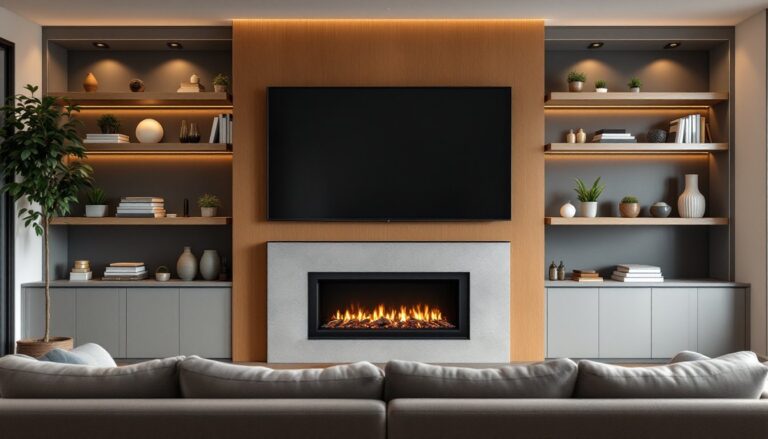
Before moving a single sofa, measure your fireplace opening and note its distance from the back wall. A fireplace sitting 12 to 18 inches from the wall is common: others are built deep into the structure, which changes sightlines. Next, identify whether the fireplace commands the room horizontally or vertically. A tall fireplace draws eyes upward, suggesting taller furniture or artwork placement. A low, linear fireplace (common in modern homes) works better with lower seating arrangements and floating shelving above.
The hearth itself, the floor area directly in front of the firebox, isn’t ideal traffic real estate. If your layout requires people to cut across the hearth regularly, you’ll create safety hazards and break the visual continuity. Plan main traffic routes to the sides or behind seating areas instead. Finally, check if the fireplace is on an exterior or interior wall. Exterior fireplaces often require a chimney chase (the enclosed structure housing the flue), which consumes floor space and may limit furniture placement.
Furniture Arrangement Styles for Fireplace-Centered Rooms
The Traditional Symmetrical Layout
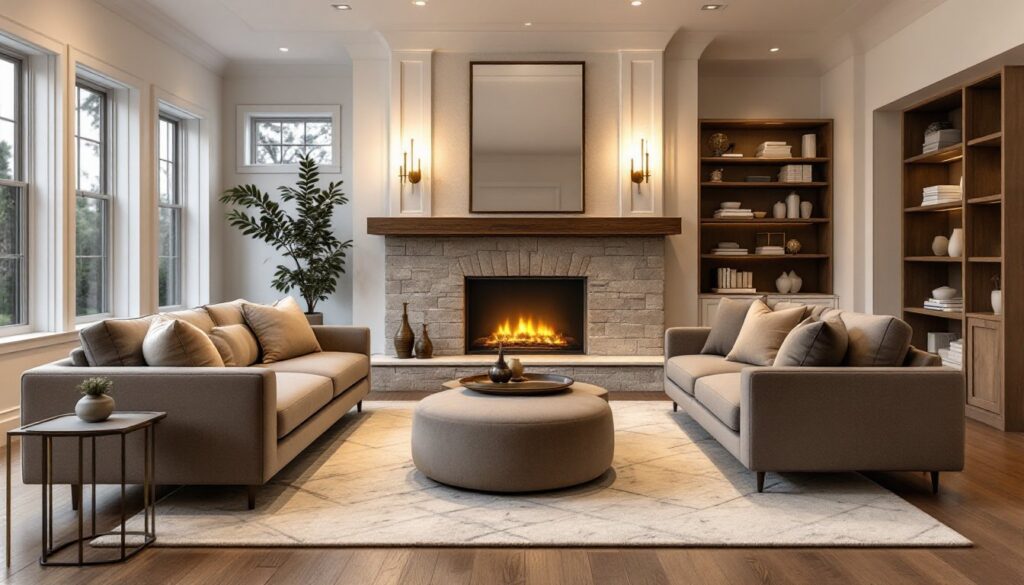
Symmetry communicates order and formality, think a pair of wingback chairs flanking the hearth, a matching sofa opposite, and a centered coffee table anchoring the arrangement. This classic setup works brilliantly in rectangular rooms with plenty of wall space on either side of the fireplace.
Start by placing the sofa perpendicular to the fireplace, roughly 7 to 9 feet away. This distance allows viewers to see the flames without neck strain and ensures the sofa doesn’t become a heat trap in winter. Position two accent chairs at 45-degree angles toward the fireplace, creating an intimate triangle. A console table behind the sofa adds symmetry and functional surface space. This layout practically demands matching throw pillows, coordinated side tables, and perhaps a mirror or artwork above the mantel to reinforce the balanced aesthetic. How to Style a Living Room with symmetry as your anchor point gives the space polish and intentionality.
The Modern Asymmetrical Approach
Asymmetrical layouts reject the “both sides identical” rule in favor of visual balance through contrast, different furniture heights, varied material textures, and grouped seating at different angles. A modern asymmetrical fireplace room might position a low-slung sectional to one side of the fireplace, paired with a single sculptural chair and a tall wooden bookshelf on the opposite side.
This approach suits open-plan living or rooms with an uneven shape. It also works when your fireplace isn’t centered on its wall. Instead of fighting the off-center position, lean into it: place a large piece (sofa, media console) on the heavier side, and balance it with visual weight on the opposite side through tall storage or a bold accent wall. Living Room Furniture Ideas often showcase asymmetrical arrangements because they feel more relaxed and contemporary. The trade-off is that asymmetry requires intentionality, accidental messiness doesn’t read as design.
Creating Balance and Flow in Your Space
Balance isn’t about matching pairs. It’s about distributing visual weight, ensuring no corner feels abandoned, and creating natural paths for people to move through the room without awkward sidesteps or dead zones.
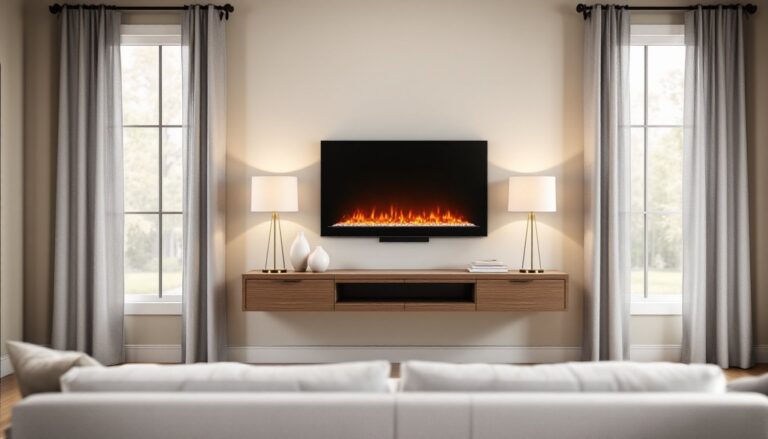
Start with a clear conversation zone. The fireplace-facing seating (sofa and chairs within 9 feet of the hearth) should face each other, encouraging eye contact and actual conversation. If you’re placing a TV above or beside the fireplace, remember that mounting a large screen above a working fireplace creates heat-damage risk and awkward viewing angles. Modern layouts often position the TV on an adjacent wall instead, angled to avoid glare from windows or the flames themselves. Reference professional living room layout strategies for inspiration, but adapt to your actual footprint.
Secondary seating (reading chair, ottoman, occasional chairs) fills out the perimeter. These don’t need to directly face the fireplace, they can angle toward windows or be positioned near a bookshelf for function and visual interest. Layering rugs helps define zones: a large rug anchors the main seating area, while a smaller runner might warm a reading nook near the windows. Traffic flow matters most: ensure there’s a clear path from the entry to the fireplace and to other doorways without redirecting foot traffic across the hearth or behind seated viewers.
Lighting, Decor, and Finishing Touches
Once furniture is in place, lighting and décor amplify the fireplace’s role without competing with it.
Ambiance lighting (wall sconces flanking the fireplace, low-wattage overhead fixtures) sets the mood and balances the warm glow of the flames. Task lighting at reading spots and accent lighting on shelving or artwork prevent the room from feeling dark or one-dimensional. Living Rooms with Wood Floors benefit from warm metallic fixtures (brass, aged copper) that echo the fire’s color palette.
For the mantel, keep décor minimal and intentional. A tall framed mirror, a pair of brass candlesticks, and a few hardcover books create visual interest without clutter. Avoid filling the mantel with tiny objects, it distracts from the fireplace’s inherent beauty and makes cleaning a nightmare.
Color and texture on the fireplace surround matter too. A brick or stone fireplace is inherently textural: paint it the same white as surrounding walls to downplay it, or embrace dark charcoal to make it a bold backdrop. A tile surround or shiplap adds personality. Whatever you choose, it should complement your overall room palette rather than fight it. Energize Your Living Room by echoing the fireplace’s warmth in throw pillows, artwork, and area rugs. Textile choices, linen, wool, leather, add tactile richness that makes the space feel lived-in and inviting.
Avoiding Common Layout Mistakes
The most frequent fireplace layout error is furniture placed too close. Sofas shoved right up to the hearth aren’t just uncomfortable in summer (heat rises directly onto laps): they also make the room feel cramped and prevent you from appreciating the fireplace’s visual presence. Maintain at least 5 to 7 feet between the sofa and the fireplace opening.
Second mistake: ignoring the actual proportions of your room. A massive sectional in a small living room leaves no circulation space. A tiny loveseat in a sprawling 20 × 25 room looks lost and creates unused perimeter zones. Match furniture scale to room dimensions. The rule of thumb is that seating should occupy roughly 60–70% of floor space, leaving 30–40% open for movement and visual breathing room.
Third: television placement directly above or in front of the fireplace. This forces viewers to crane their necks or ignore the fireplace entirely. Mount the TV on an adjacent wall or a media console positioned perpendicular to the fireplace. Yes, it’s less “symmetrical,” but it’s functional and honest.
Fourth: forgetting about window placement and natural light. A living room layout that blocks natural light behind a sofa wastes architectural value. Position seating to allow light flow and sightlines to windows. Dark wood flooring or Living Rooms with Dark Wood Floors layouts benefit from maximum natural light to avoid feeling cave-like.
Fifth: neglecting traffic patterns. Arrange furniture in clusters, not lines, and ensure there’s always a clear route from entry to other rooms without stepping over ottomans or squeezing between chairs. Finally, avoid over-accessorizing too early. Lay out the bones of your fireplace-centered layout, live with it for a month, then add Living Rooms with Area Rugs and décor that actually suit the space and your habits. Pinterest perfection doesn’t account for how your family moves through and uses the room.