Table of Contents
ToggleYour coffee table isn’t just functional furniture, it’s the first thing guests notice when they walk into your living room. Yet many homeowners treat it as empty real estate, a place to dump the TV remote and last Sunday’s newspaper. The difference between a cluttered surface and a thoughtfully decorated table comes down to intentional layering, balance, and understanding what actually belongs in that space. Whether you’re working with a glass side table, a solid wood coffee table, or a sleek modern console, the right decor strategy can anchor your entire room’s aesthetic and create a focal point that ties everything together. This guide walks you through practical, actionable ideas to refresh your table surfaces with style and purpose.
Key Takeaways
- Your living room table decor sets the tone for your entire room and deserves intentional styling rather than serving as a catch-all surface for clutter.
- Create visual interest through layering by combining height variation, texture contrast, and a mix of decorative and functional pieces arranged in triangular patterns with odd numbers.
- Keep living room table decor balanced with 5–7 items maximum, using trays and containers to corral smaller objects and maintain a polished, uncluttered appearance.
- Choose colors and styles that either complement or subtly accent your existing living room palette—neutral rooms can introduce muted color, while already-colorful spaces should echo their palette.
- Refresh your table seasonally with simple swaps like changing candle colors, rotating books, or updating runners rather than making new purchases each season.
- Avoid common styling mistakes like treating your table as storage, buying decor just to fill space, hiding quality materials under runners, or arranging items with zero height variation.
Why Your Coffee Table Deserves More Attention
A well-dressed coffee table does more than hold your morning coffee cup. It sets the tone for your entire living room and signals to visitors that you’ve thought about your space. Think of it as the centerpiece of your room’s conversation zone, everything radiates from this surface.
Your table is the first horizontal plane most people’s eyes land on when they sit down. That real estate is valuable. A bare, empty table actually feels chaotic and unfinished, even if your sofa and walls are perfect. Conversely, cramming it with junk creates visual noise that drains energy from the room. The sweet spot? Intentional curation that balances function and aesthetics.
When styling your table, you’re essentially creating a mini-environment that reflects how you actually live. Books you’re reading, decorative objects you love, and functional items you use daily should coexist without looking staged or cluttered. How to Style a Living Room offers deeper insights into room-wide strategies that extend right to your tabletops. The goal is making something that looks polished while remaining genuinely livable.
Essential Decor Layers for Visual Interest
Great table styling follows the same principle as good interior design: layering. You need height variation, texture contrast, and a mix of decorative and functional pieces arranged with intention.
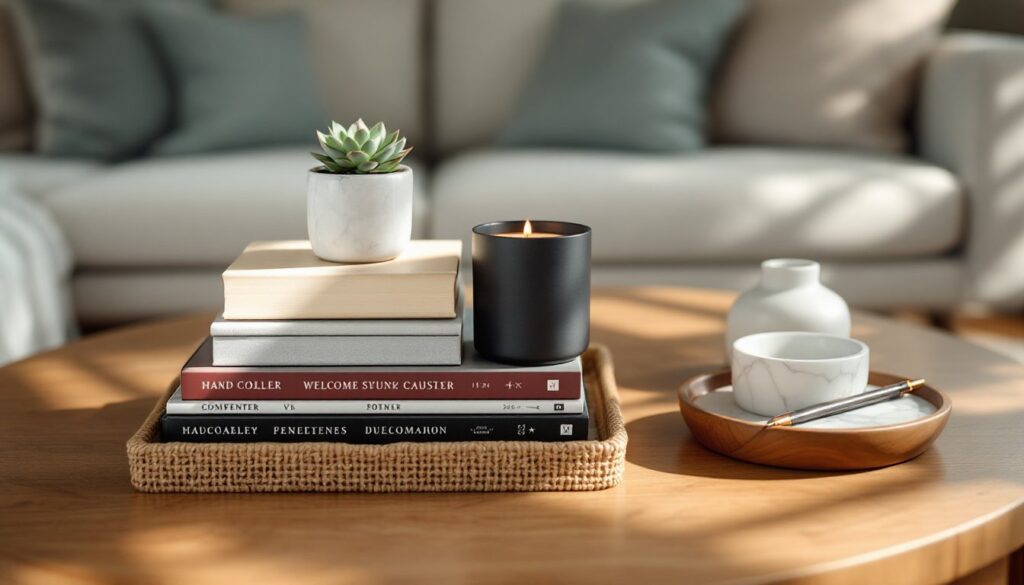
Start with a base, this might be a table runner, a piece of decorative fabric, or simply the bare wood or glass surface if it’s stunning enough to showcase. This anchors the composition. Then build upward and outward: place a stack of books on one end, lean a framed photo or art print against a table lamp, and cluster smaller objects (a candle, a small plant, a decorative bowl) in a triangular arrangement rather than a straight line. Triangles and odd numbers feel more natural and visually interesting than symmetrical pairs.
Functional Accessories and Storage Solutions
Functional items deserve prominent placement because you’ll actually use them. A wooden tray corrals smaller items, remotes, coasters, pens, and creates a contained zone within the larger surface. Living Room Furniture Ideas touches on how furniture selection influences every detail of your décor strategy, including what goes on top of it.
A basket under a glass or metal side table provides hidden storage for blankets or magazines without creating visual clutter above. Ceramic or metal containers keep writing supplies, candle matches, or coins organized. Coasters aren’t just practical, beautiful ones in marble, wood, or ceramic add a decorative element while protecting your table from water rings and heat damage.
Books should be treated as objects, not just storage. A few hardcovers in complementary colors, stacked horizontally with a decorative object or plant on top, add vertical interest. Mixing hardcover and paperback, or arranging them by color, changes the visual impact significantly.
Color and Style Combinations That Work
Your table decor should whisper rather than shout. If your living room runs neutral, grays, beiges, whites, your table becomes the chance to add subtle color. A matte black candle, a terracotta plant pot, or a jewel-toned book spine introduces richness without overwhelming the space. If your room already has color, your table should echo that palette in muted tones.
Style matters as much as color. A farmhouse living room benefits from natural wood, woven baskets, and vintage-inspired decor, think a chunky wooden box, linen coasters, and ceramic vessels. A minimalist or contemporary space calls for clean lines: a single sculptural object, a thin metal tray, perhaps one perfectly styled plant in a sleek pot. Eclectic rooms can play with mix-and-match textures, wood, metal, ceramic, glass, and fabric all working together because they’re intentionally chosen.
Interior Design for Living Rooms explores how individual elements like table styling fit into a cohesive whole. The key is restraint, five to seven items on a standard coffee table is the upper limit before it feels cluttered. Less is genuinely more here.
Seasonal Refresh Ideas for Your Tables
Your table decor doesn’t need to stay static year-round. Seasonal shifts are the easiest way to refresh without redecorating your entire room.
Spring calls for pastels, fresh greenery, and lighter materials, pale pink candles, small potted herbs or succulents, linen runners. Summer is the time for bright accents, coastal elements if that’s your style, and items that feel airy, white or cream-colored objects, glass vases, perhaps a small bell jar with shells or coral. Fall invites warm earth tones: amber or rust-colored candles, leather-bound books, maybe a small gourd or dried flower arrangement. Winter leans into rich jewel tones, metallics, and coziness, deep blue or emerald candles, gold or copper accents, maybe a small holiday-themed object if that appeals to you.
You don’t need new purchases for each season. Swapping out a candle color, rotating book selections, or changing a table runner is enough. Resources like home design inspiration showcase seasonal styling ideas that translate well to tabletop styling.
Common Mistakes to Avoid
The biggest mistake is treating your table as a catch-all. Every object should either be beautiful, functional, or ideally both. Remote controls belong in that tray we mentioned: random paperwork goes in a drawer. Don’t let your table become an extension of your junk drawer.
Second mistake: buying decor specifically to fill space. Those decorative balls in a glass bowl, the abstract sculpture you don’t connect with, the candle in a scent you dislike, they add clutter without adding joy. Choose items you genuinely use or love. Energize Your Living Room emphasizes creating spaces that energize rather than drain, which absolutely includes your table surfaces.
Third: ignoring the actual tabletop material. If you have a beautiful wood or marble surface, don’t hide it completely under a runner or tray. Let the base show. If it’s scratched or worn, that runner becomes essential. Conversely, a glass table needs careful styling, too many items underneath can look chaotic, while five strategically placed objects create elegance.
Fourth mistake: zero height variation. Everything at the same level reads as flat and boring. Use books, small stands, or even small wooden boxes to create vertical interest. Your eye should move up and down, not just across the surface.
Conclusion
Your coffee table or living room side table is prime real estate for creating a polished, intentional space. By layering heights and textures, choosing items with purpose, and respecting seasonal shifts, you transform a functional surface into a design focal point. Start with one thoughtful change, a new tray, a curated book stack, or a single beautiful plant, and build from there. Your table doesn’t need to be styled like a magazine spread to feel complete: it just needs to reflect how you actually live while looking intentional about it.