Table of Contents
ToggleCreating a beautiful, functional nursery starts with one essential detail: the walls. Nursery wall decor sets the tone for your baby’s room, it’s where color, texture, and personality converge to create a soothing environment for sleep and play. Whether you’re designing a space for a newborn or refreshing an existing room, wall decor for baby rooms doesn’t need to be complicated or expensive. From paint choices and wallpaper to murals and wall-mounted shelving, the right approach depends on your budget, style preferences, and what you want the space to communicate. This guide walks you through popular approaches, DIY projects you can tackle yourself, and practical tips for selecting colors and textures that work both aesthetically and functionally.
Key Takeaways
- Nursery wall decor sets the emotional and functional tone of the room, with soft colors and thoughtful design creating a calming environment that supports sleep while protecting walls from inevitable wear and tear.
- Popular styles like minimalist Scandinavian designs and gender-neutral nature-inspired themes offer longevity, allowing your wall decor for baby rooms to grow alongside your child without feeling dated within 18 months.
- DIY wall decor projects—including painting, stenciling, removable wallpaper, and floating shelves—are achievable without professional help and cost-effective when you invest time in proper prep work and measurement.
- Color psychology matters: soft blues, greens, purples, and warm neutrals promote relaxation and sleep, while bright saturated colors should be avoided as primary walls since they stimulate rather than soothe.
- Test paint colors on large wall sections under different lighting conditions before committing, and layer textures through wooden accents, woven hangings, and textured wallpaper to prevent a flat appearance.
- Choose durable, wipeable finishes like satin or semi-gloss for high-traffic lower walls to handle diaper cream and sticky hands, and opt for classic neutrals with changeable accents to allow future refreshes without repainting.
Why Wall Decor Matters in a Nursery
Wall decor in a nursery isn’t just about aesthetics, it shapes how your baby experiences the room day in and day out. Soft colors and gentle patterns can help create a calming environment that supports better sleep, while thoughtful design choices make the space feel intentional rather than generic. The walls are the largest visual surface in any room, so they have outsized influence on mood and atmosphere.
Beyond the emotional impact, nursery wall decor serves practical functions. Paint protects drywall from stains and damage, inevitable when you’re changing diapers and handling bottles. Textured wallcoverings or wall panels can hide minor wall imperfections and add acoustic properties that dampen sound. Wall-mounted storage, shelving, and organizers keep essentials within arm’s reach without eating up floor space, which is critical in smaller nurseries.
Choosing baby girl nursery wall decor, baby boys wall decor, or gender-neutral options means thinking about longevity. A space that works for a newborn should still feel right when they’re a toddler. This doesn’t mean avoiding color or personality, it means choosing designs that grow with the child rather than designs that feel babyish after 18 months.
Popular Nursery Wall Decor Styles
Understanding current nursery decor wall trends helps you make choices that feel fresh without being trendy in a way that dates quickly. Several styles have staying power and work well in various homes.
Minimalist and Scandinavian Designs
Minimalist nursery wall decor strips away excess in favor of clean lines, open space, and a limited color palette. Scandinavian designs, a popular subset of minimalism, emphasize functionality, natural materials, and subtle patterns. Think soft whites, grays, and pale blues paired with wooden accents and woven textures.
For minimalist nurseries, paint is often the primary design tool. A single accent wall in a soft, muted tone provides visual interest without overwhelming the space. Wooden wall shelving for storage, simple framed prints, and perhaps a small mobile create definition without clutter. This approach works especially well in smaller rooms or apartments where every square inch matters.
Scandinavian nursery wall decor often includes natural light wood furniture, sheepskin rugs, and woven wall hangings. The key is restraint, every item should serve a purpose or bring genuine joy. Avoid the urge to fill walls with dozens of frames or decorations. Two or three well-chosen pieces create more impact than a crowded gallery.
Gender-Neutral and Nature-Inspired Themes
Nursery wall decor for baby rooms increasingly skews gender-neutral, which allows flexibility if your family grows or if you’re designing for a space used by multiple children over time. Nature-inspired themes are a natural fit: botanical prints, animals, and landscape imagery appeal across genders and create a soothing visual environment.
Wall decor baby rooms often feature soft greens (reminiscent of forest or sage), warm terracottas inspired by earth tones, or cool blues evoking sky and water. Peel-and-stick wallpaper with subtle patterns, think small trees, clouds, or leaves, provides texture without the commitment of traditional wallpaper. These are easier to remove if your child’s preferences change.
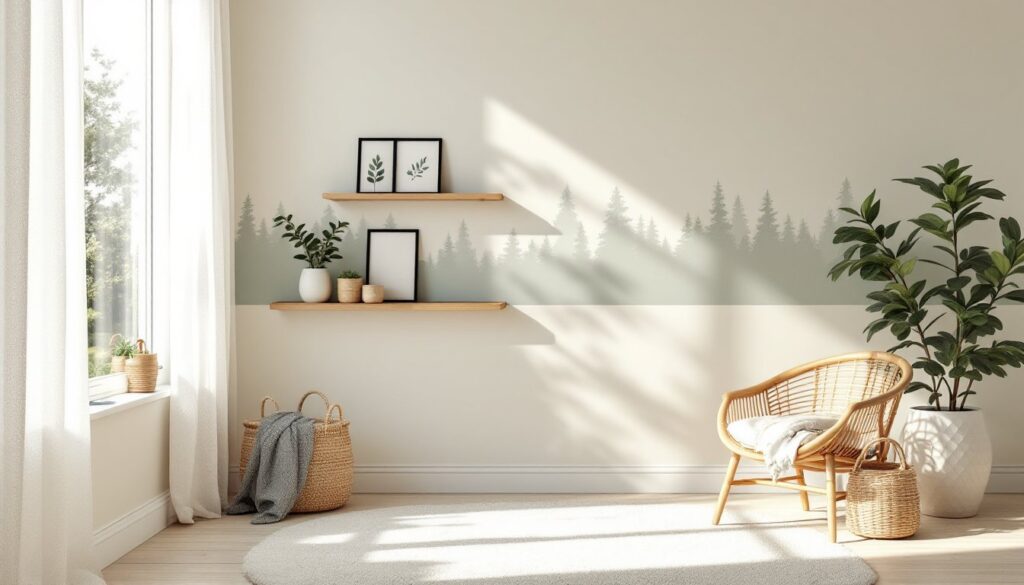
Wall decor nursery designs incorporating nature often include living elements: small potted plants on high shelves (out of reach), a water feature like a small tabletop fountain, or even a mural-style paint treatment showing a forest canopy or starry sky. These choices create a calming atmosphere backed by research showing that exposure to natural imagery reduces stress in both babies and adults.
DIY Wall Decor Projects You Can Make
You don’t need a professional designer or contractor to create meaningful wall decor in your nursery. Several projects are well within the reach of a motivated DIYer with basic tools.
Wall Painting Basics
A fresh coat of paint is the fastest, most cost-effective wall decor transformation. Choose quality low-VOC (volatile organic compound) paint, particularly important in a nursery where your baby will spend hours breathing air. Many major brands now offer nursery-specific formulations. Use two coats, and allow proper drying time between coats (check the label for specific timeframes, typically 2–4 hours for latex paint).
Before painting, invest time in prep: patch holes with spackle, sand smooth, prime bare spots, and tape baseboards and trim with painter’s tape. A poorly prepped wall shows every imperfection: a properly prepped wall looks professional. For an accent wall, measure carefully, use a level to snap a chalk line, and apply painter’s tape along the line to get a clean edge.
Stenciled or Hand-Painted Designs
If you want more than a solid color, stencils allow you to add patterns, animals, or text without artistic skill. Wall decor for nursery rooms often features large stenciled images: a tree outline, a constellation map, or a simple quote. You’ll need the stencil (available online or at craft stores), a foam roller or stencil brush, and paint. Work carefully, stencil bleed is the enemy. Use minimal paint on your brush, and work from the edges inward to avoid pushing paint under the edges.
Removable Wallpaper and Wall Decals
Peel-and-stick wallpaper and decals are renter-friendly and require zero tools beyond a utility knife and a smoothing tool (even a credit card works). Baby wall decor using removable wallpaper includes botanical prints, geometric patterns, or photographic scenes. These products have come a long way, quality brands stick securely and remove cleanly without damaging paint underneath.
Wall Shelving Installation
Floating shelves serve double duty as storage and display. If you’re installing shelves, locate studs using a stud finder and use appropriate wall anchors (toggle bolts or heavy-duty drywall anchors if studs aren’t available). Shelves rated for 25 pounds or more are appropriate for a nursery holding books, small plants, and decor. Install them at least 60 inches above the floor (beyond reach of curious toddlers climbing or hanging). Use a level to ensure they’re perfectly horizontal, a shelf that’s off-kilter looks sloppy and makes objects slide.
Resources like The Spruce Crafts offer detailed step-by-step guides for stenciling, wallpaper application, and other wall projects if you want additional visual reference before starting.
Simple Fabric Wall Hanging
A fabric art panel adds softness and visual interest without requiring tools. Choose a quilting-weight cotton or linen in a color that coordinates with your room, stretch it over a lightweight wooden frame (available at craft stores), and attach it to the wall using a picture-hanging strip. This project costs under $30 and takes 20 minutes.
Frame Wall Display
Instead of a crowded gallery, select 3–5 frames in coordinating colors and arrange them thoughtfully. A mix of black, white, and natural wood frames works in almost any style. Include a mix of imagery: botanical prints, animals, a favorite photograph, or even blank mats with vinyl lettering of the baby’s name or a meaningful word. Arrange on the floor first to determine spacing, then use a level and a pencil to mark hanging points.
Choosing Colors and Textures for Wall Decor
Color selection shapes the entire feeling of your nursery, so it’s worth thinking through carefully.
Color Psychology in Nurseries
Science supports what decorators have long known: color influences mood and behavior. Soft blues, greens, and purples promote relaxation and sleep. Warm neutrals like taupe, beige, and soft gray create a cozy, secure feeling. Avoid bright, saturated colors (hot pink, electric blue, neon yellow) as primary walls, they stimulate rather than soothe. These can work as accents in small doses.
If you’re selecting baby girl wall decor, consider soft pinks, mauves, or peachy tones rather than stereotypical hot pink. For baby boys wall decor, gentle blues, sage, or warm grays offer more sophistication than traditional navy. Wall decor for nursery rooms works best when color supports the room’s primary function: restful sleep.
Testing Before Committing
Paint color appears different in various lighting conditions and on large wall areas versus small paint chips. Buy a quart of your chosen color and paint a large section (2–3 feet square) on two adjacent walls, if possible. Live with it for a few days, observe it in natural morning light, afternoon light, and evening artificial light. What looks calming in the paint chip might feel too cool or too warm once it covers a whole wall.
Texture Layers
Texture prevents a nursery from feeling flat and adds visual interest. Combine smooth painted walls with textured elements: woven wall hangings, soft area rugs, fabric panels, or a textured wallpaper accent. Wood shelving and frames introduce natural texture. A chunky knit wall hanging or a woven basket adds tactile interest visible from across the room.
Wallpaper designed specifically for nurseries often incorporates subtle texture, a soft linen look or embossed pattern, without being visually busy. This works well in small rooms or when you want to add complexity without overwhelming the space. Darker paint colors often benefit from matte or eggshell finishes (versus high gloss) to mask imperfections and reduce visual harshness.
Practical Considerations
Choose finishes that withstand wear. Semi-gloss or satin finishes in high-traffic areas (lower walls) resist stains and wipe clean easily. Matte finishes hide imperfections but require more careful cleaning. In a nursery, you’ll encounter spit-up, diaper cream, and sticky hands, so durability matters.
Wallpaper and paint are investments in time and money: choose colors you’ll still love in three years. Trendy accent wall colors date quickly. Classic neutrals with changeable decor accents (removable wall decals, artwork, shelving displays) give you flexibility to refresh without repainting. Resources like Addicted 2 Decorating showcase budget-friendly color transformations and DIY painting techniques that help you visualize what’s possible in your own space.
Conclusion
Transforming your nursery’s walls combines thoughtful planning with hands-on execution. Start by identifying the style and color palette that feels right for your space and your family. Whether you choose minimalist simplicity, nature-inspired imagery, or a personal combination of elements, the key is intentionality. Most wall decor projects, painting, shelving, stenciling, or hanging artwork, are achievable without professional help. Take time with prep work, measure twice, and allow yourself to step back and assess before finalizing. A well-designed nursery wall becomes the backdrop for countless memories, so it’s worth getting it right.