Table of Contents
ToggleA blue couch can transform a living room from ordinary to extraordinary. Whether you’re drawn to the sophistication of navy or the calming effect of sky blue, this hue offers versatility that works across nearly every design aesthetic. Blue couches don’t just fill floor space, they set the tone for the entire room, anchoring your décor while creating an inviting atmosphere that welcomes everyone who walks through the door. If you’re considering making the leap into a blue couch living room, you’ll find plenty of inspiration and practical strategies to make the most of this bold choice.
Key Takeaways
- Blue couch living room designs create a bold design statement that brings personality and intention to your space while reducing stress and maintaining contemporary appeal.
- Navy blue offers timeless elegance and practicality for high-traffic homes, while light blue creates airiness and calm—choose based on your room’s lighting and household needs.
- A blue couch works seamlessly across multiple design styles including modern, transitional, coastal, Scandinavian, and industrial when paired with the right accessories and complementary colors.
- Accessories like neutral pillows, warm-toned lighting, and strategic wall colors are essential to integrate your blue couch into a cohesive living room rather than letting it dominate the space.
- Observe fabric samples or paint swatches in your actual living room at different times of day, as lighting dramatically changes how a blue shade appears and feels in your space.
Why Blue Couches Make a Bold Design Statement
A blue couch commands attention in the best way possible. Unlike neutral grays and beiges, blue brings personality and intention to your living space. It signals that you’ve made a deliberate design choice rather than settling for a safe default. Blue works psychologically too, it’s proven to reduce stress and create a sense of calm, which is exactly what you want in a room where you unwind after long days.
The beauty of a blue couch lies in its ability to anchor a room without feeling heavy or dated. Modern design celebrates color, and choosing a blue sofa positions your home within contemporary trends while maintaining timeless appeal. Interior designers have long recognized blue as one of the most versatile colors in the palette. It plays well with warm metallics, natural wood tones, and both cool and warm accent colors. A blue couch essentially gives you permission to experiment with your accessories and wall treatments because the foundation is already strong.
Choosing the Right Shade of Blue for Your Living Room
Not all blues are created equal. The shade you select will dramatically influence how the room feels and what complementary colors work best with it. Before committing to any couch, grab paint swatches or fabric samples and observe them in your space at different times of day. Lighting changes everything, a blue that looks perfect in a showroom might feel entirely different in your north-facing living room.
Navy Blue: Timeless Elegance and Versatility
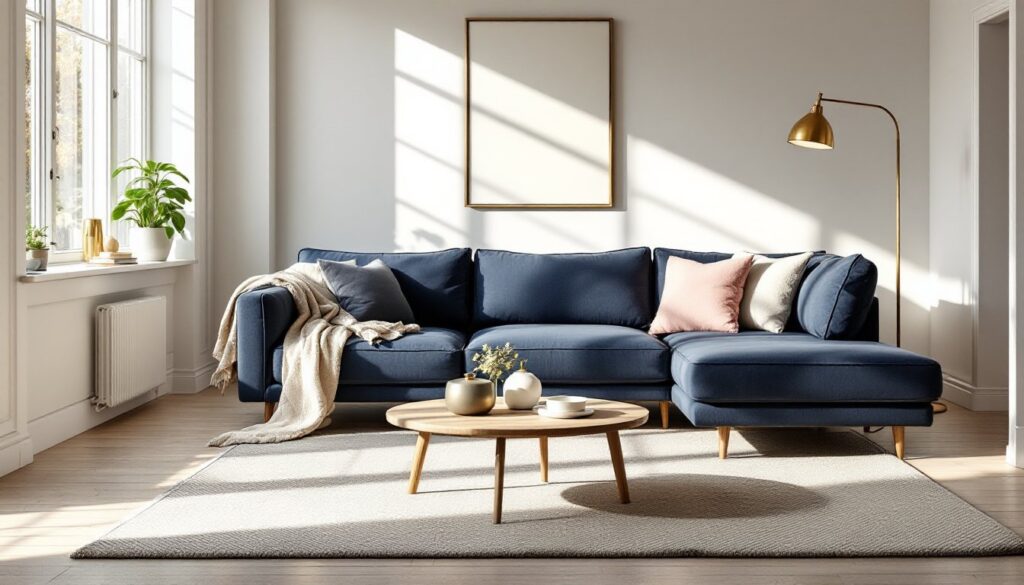
Navy blue is the workhorse of blue couches. It’s sophisticated without being stuffy, dark enough to hide wear but not so dark that it feels cave-like in smaller rooms. Navy pairs beautifully with warm wood furniture, brass accents, and both cream and warm white walls. You can dress a navy couch up with jewel-tone pillows and metallic accessories or keep it casual with natural linen throws and weathered wood coffee tables. Navy also handles high-traffic scenarios better than lighter blues, it’s genuinely practical if you have kids, pets, or anyone who actually uses their furniture.
Light Blue: Airiness and Calm Vibes
Light blue creates an open, airy feeling that works especially well in smaller living rooms or spaces with limited natural light. This shade pairs naturally with soft grays, warm whites, and pale wood tones. Consider what happens when light blue meets a crisp white ceiling and pale wooden flooring, the room instantly feels larger and more serene. The trade-off? Light blue shows dirt more readily than navy, so think practically about your household before choosing this shade. Light blue couches shine in minimalist spaces and work-from-home environments where you want to feel mentally calm and focused.
Design Styles That Complement a Blue Couch
A blue couch isn’t locked into one aesthetic. The specific shade and fabric you choose will guide which styles feel most natural, but blue works across virtually every design category.
Modern and contemporary spaces benefit from deeper blues paired with clean lines, minimalist accessories, and perhaps a single bold artwork. Here’s where you might explore living rooms with sectional sofas if you prefer extended seating arrangements. Transitional design, that middle ground between traditional and modern, loves blue couches. Add vintage brass lamps, a patterned area rug, and classic wooden side tables, and your blue couch becomes the centerpiece of a collected, intentional room.
Traditional spaces can absolutely feature blue couches, especially in navy or muted teal-leaning shades. Pair these with rolled arms, nail head trim, and classic wood furniture for an estate-like feel. Coastal and Scandinavian styles naturally gravitate toward blue. Coastal design leans into lighter, brighter blues with whites and natural textures, while Scandinavian design embraces deeper, cooler blues balanced with pale wood and functional minimalism. Industrial style works with blue couches when you layer in exposed brick, metal accents, and raw wood elements. The key is choosing a blue that either contrasts sharply with your industrial elements or echoes the cool tones in concrete and steel.
Accessorizing and Color Pairing for Maximum Impact
Once your blue couch is in place, accessories make the difference between a couch that dominates the room and a couch that feels integrated into a cohesive whole. Your pillow strategy is crucial, this is where you introduce complementary colors without commitment. Neutral pillows in cream, gray, or warm white provide balance and let the blue couch shine. But here’s where you can play: add one or two accent pillows in coral, mustard yellow, or soft blush to create visual interest and warmth.
Wall color is your next big decision. Warm white walls let a blue couch breathe and feel fresh, especially with light blue sofas. Soft gray walls create elegant neutrality behind navy couches. Some homeowners boldly choose warm, complementary wall colors, think soft terracotta, warm cream, or even pale sage green, which can make a blue couch feel like part of a unified color story. Flooring and rugs deserve equal attention. Living rooms with area rugs showcase how the right rug grounds a blue couch and defines your seating zone. A neutral or subtly patterned rug prevents visual competition with your statement piece.
Lighting is underrated in design discussions but absolutely critical. A blue couch needs task lighting, ambient lighting, and ideally some warm accent lighting to prevent the room from feeling cold. Table lamps with warm-toned shades, a brass floor lamp, or even candles add warmth that balances cool blue tones. Finally, consider interior design for living rooms when selecting wood tones and metal finishes. Warm metals like brass and gold complement most blues beautifully, while natural wood in medium-to-warm tones anchors the space without fighting the couch for attention.
Conclusion
A blue couch is an investment in both comfort and style. Whether you choose sophisticated navy or serene light blue, your decision to embrace color in your living room pays dividends in atmosphere and personal satisfaction. The key to success is thoughtful coordination, select your shade based on your room’s light and size, choose a design style that aligns with your aesthetic, and build your accessories deliberately rather than randomly. Your blue couch living room can be the sanctuary you’ve always wanted.